 Guide
GuideIs the LEGO Barad-dur Worth It? (Honest Take)
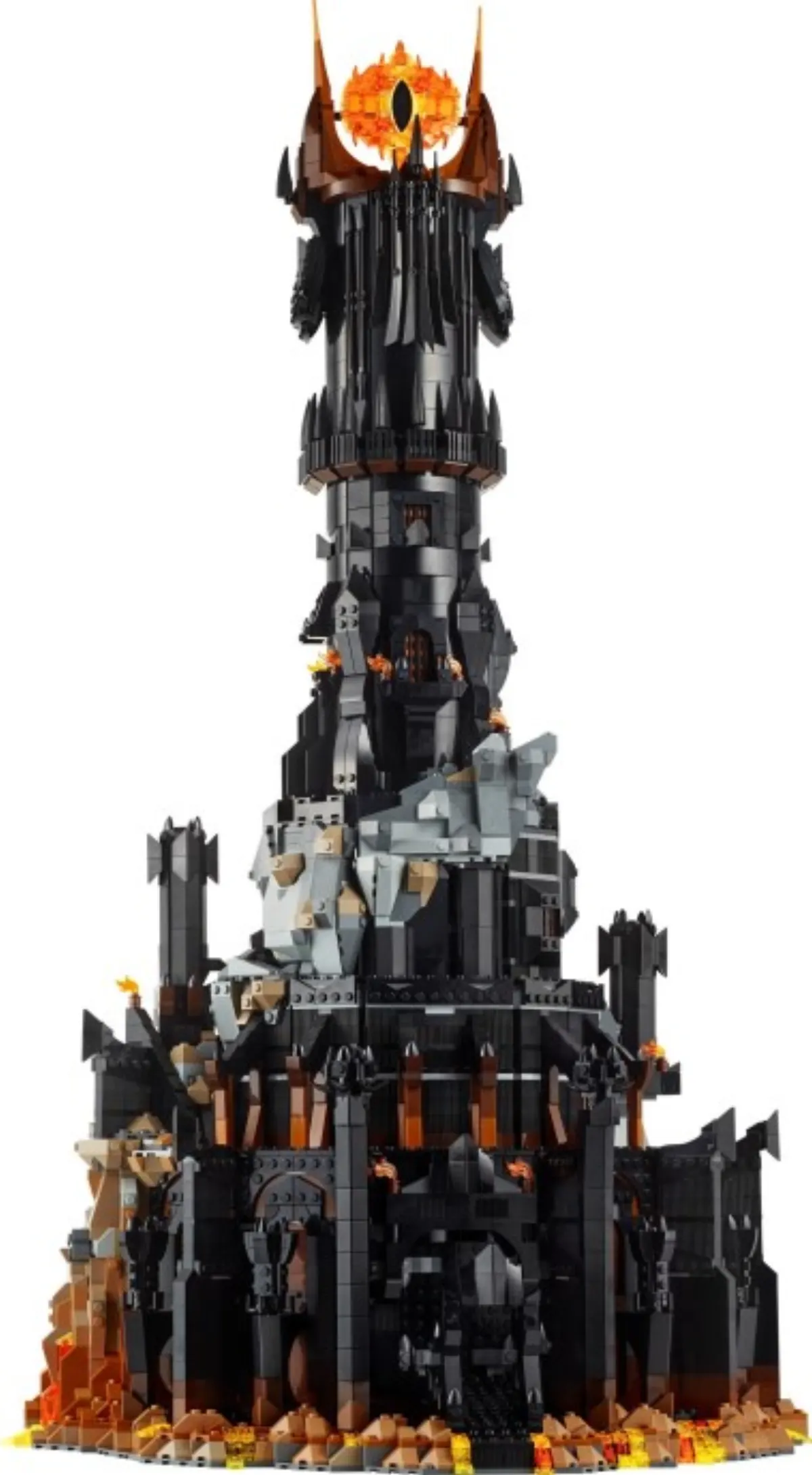
If you've spent any time looking at LEGO's Lord of the Rings sets, you've probably landed on this question: is the LEGO Barad-dur worth it, or is it just an expensive black tower that looks better on Instagram than it does on a shelf in your living room? It's a fair thing to ask. The set (officially The Lord of the Rings: Barad-dur, set number 10333) is one of the biggest Icons releases LEGO has put out, with 5,478 pieces that build up into Sauron's fortress from the films, complete with the Eye at the top and a display of Middle-earth's key locations wrapped around the base.
This isn't a small purchase, and it isn't a quick build either. Before you commit, it helps to know what you're actually signing up for: the hours it takes, what the final model does and doesn't do, and who tends to be happy they bought it versus who ends up regretting the shelf space it eats. We'll walk through all of that here, without any invented numbers or guesses dressed up as facts.
What you're actually building
Barad-dur isn't a single tidy model the way a lot of Icons sets are. It's a tower, yes, rising up in that jagged, obsidian-black style straight out of the films, topped with the Eye of Sauron rendered in a glowing orange piece. But wrapped around the base is a ring of smaller scenes and structures pulled from across the trilogy: Mount Doom, the Black Gate, and other key locations get folded into the display in miniature. That's part of what makes this set different from, say, a spaceship or a car. You're not building one object, you're building a whole diorama that tells a story when it's finished, and that changes how you should think about the payoff. If you're expecting a single dramatic tower and nothing else, the surrounding scenery might feel like padding. If you're a fan of the films who wants a piece that captures the scope of Middle-earth, that same scenery is the best part.
It also means the set works on two different levels at once. Up close, the small vignettes reward the kind of person who likes to point out a specific detail and explain why it matters. From a few feet back, the whole thing reads as one cohesive scene, a little like a museum diorama rather than a single collectible. That dual nature is worth knowing about going in, because it's very different from a set like a car or a building that's just one object at one scale. You're getting a landscape, not a landmark, and the two experiences of looking at it (close inspection versus overall silhouette) are both part of what you're paying for.
The build experience
At 5,478 pieces, this is a genuinely long build, and it doesn't hide that fact. The tower itself is built in sections that stack and lock together, which keeps the process from feeling repetitive the way some tall Icons builds can, but there's still a long stretch in the middle where you're placing similar dark grey and black pieces in a pattern that takes a while to read. The detail work on the smaller scenes around the base is where the set earns its keep. Those sections move faster and reward attention, since each one is doing a different job (a gate, a mountain, a ruin) rather than repeating the same wall panel forty times. Plan for this to take several sittings rather than one long afternoon. It's not a set you rush, and trying to power through it in one go is how the tower sections start feeling like a chore instead of a build you're enjoying.
The instructions themselves are organized in a way that helps you keep momentum. Instead of one giant book that covers the whole model start to finish, the bags and steps are broken up so you complete recognizable chunks (a section of the tower, one of the smaller scenes) before moving to the next. That structure makes it easier to stop for the night at a natural break point instead of leaving a half finished wall staring at you from the table. If you've built other large Icons sets before, the pacing here will feel familiar. If this is your first big set, go in expecting the middle stretch to feel slower than the start and the finish, because that's normal for a build this size, not a sign anything's gone wrong.
How it displays
This is where Barad-dur separates itself from a lot of other big licensed sets. The finished model has real presence. The tower has height and the jagged, asymmetrical silhouette that makes the design instantly recognizable, and the Eye piece at the top genuinely reads as a focal point rather than a gimmick. The surrounding diorama gives the whole thing a sense of scale that a single tall tower on its own wouldn't have. Where it gets tricky is footprint. This isn't a set you can tuck onto a narrow shelf, because the scenery pieces spread the display out horizontally as much as the tower reaches up vertically. Before you buy, measure the space you actually have in mind for it. A lot of buyers get the size right for height and then find the base needs more depth than they expected.
Lighting matters more here than it does for most sets, too. Because the palette leans so heavily on black and dark grey, the model can look flat or lose its detail in a dim corner of a room, and it comes alive under the kind of light that lets the jagged silhouette throw real shadows. If you're planning a spot for it, a shelf or console with a bit of overhead or side lighting will show off the design far better than a dark bookcase will. It's also worth thinking about sightlines. Because the small scenes wrap around the base, a display against a wall hides part of the story from view, while a spot that lets you walk around it (even a plain table) shows off the whole layout the way the designers intended.
Who this set is actually for
Barad-dur rewards a specific kind of buyer: someone who loves the Lord of the Rings films and wants a display piece that captures the tone of Mordor, not just a random black tower. If you're that person, the build time and the price tag both start to feel like the cost of getting something genuinely worthy of the source material, rather than a compromise. If your interest in Middle-earth is lighter, or you mostly want a big building project regardless of theme, there are other Icons sets that give you a comparably long build without asking you to care about the specific story being told. This one leans hard on the license. The design choices (the color palette, the layout of the surrounding scenes) only fully land if you know what you're looking at.
Where it falls short
Being honest about the weak points matters as much as talking up the good ones. The color palette is almost entirely black, dark grey, and a few muted browns, which is thematically correct but means the build can feel visually monotonous for long stretches, especially through the main tower sections. Sorting pieces ahead of time helps more here than on a set with more color variation to guide you, since a lot of similarly shaped dark pieces get harder to tell apart in low light. The stickers, where the set uses them, are fiddly in the way stickers on large dark sets tend to be, since any misalignment shows up more against flat black than it would against a busier color. And because the design is built around a diorama rather than one contained model, there's more assembly of separate pieces into a final display than a straightforward single-structure set, which some builders find satisfying and others find like extra work tacked onto an already long build. If you're someone who likes a build with a clear visual variety throughout, budget some patience for the stretches where this one doesn't offer much.
Is it worth it compared to other big Icons sets
LEGO's biggest Icons releases (this one included) tend to sit at the high end of the lineup's price range, which is the trade-off for the piece count and the detail. Whether that's worth it depends less on the set itself and more on how much you value the specific license. A comparably sized set from a theme you don't care about at all will almost always feel like worse value than a smaller set in a theme you love, and Barad-dur is a clear example of that rule. If Middle-earth is a world you'd genuinely display in your home, the piece count and build time here are in line with what LEGO typically asks for its largest Icons releases. If you're on the fence about the theme, that's worth resolving before you resolve the price question, because the price will feel fair or steep almost entirely based on how much the subject matter means to you.
Barad-dur is a genuinely impressive build for the right buyer: someone who loves the Lord of the Rings films and wants a display piece that captures Mordor's scale, not just a tall black tower. If that's you, the long build and the size of the commitment are part of the appeal. If your interest in the theme is lukewarm, put the budget toward a set in a world you actually care about instead.
Common questions
How long does the LEGO Barad-dur take to build?
Plan for multiple sittings rather than a single session. At 5,478 pieces with long repetitive stretches through the tower sections, most builders spread it across several evenings or a couple of weekends rather than trying to finish it in one go. The detailed scenery sections around the base tend to move faster than the tower itself.
Will the LEGO Barad-dur get retired?
LEGO doesn't publish a retirement calendar, so there's no official date to point to. Large Icons sets like this one typically stay in the lineup for a few years before being reported as retiring, but that's a general pattern, not a guarantee, so buy based on whether you want it now rather than trying to time a retirement.
Does the LEGO Barad-dur come with minifigures?
This is primarily a display and architecture build focused on the tower and the surrounding Middle-earth scenery rather than a minifigure-driven set. If figures matter a lot to you, it's worth checking the current box listing for exactly what's included before you buy, since our focus here is the build and display experience rather than a full inventory.
How much display space does the LEGO Barad-dur need?
More than its height alone suggests. Because the design wraps smaller scenes around the base of the tower, the footprint spreads out horizontally as well as reaching up vertically. Measure the depth of the shelf or table you have in mind, not just the height, before you commit to a spot for it.