

How LEGO Sets Are Numbered (Set Numbers Explained)
Set numbers look like a code you should be able to crack, but they're mostly just an inventory system. Here's what the digits actually tell you, and what they don't.
If you've ever flipped a LEGO box over looking for meaning in that string of digits, you're not alone. This guide on LEGO set numbers explained walks through what that number is actually doing, because it turns out to be a lot less mysterious (and a lot less organized) than it looks.
A set number is really just an inventory tag. It helps LEGO, retailers, and secondhand sellers refer to one specific product without typing out the full name every time, the way a book has an ISBN. It's not a secret code that tells you the year, the theme, or how good the set is, and treating it like one is the fastest way to end up confused when you're trying to track down a specific box.
Once you know what the number is for and what it isn't for, buying, searching, and reselling LEGO all get a lot easier. That's what this guide covers: the parts of the number, the dash at the end, and where the number actually helps you as a buyer.
The short answer
A LEGO set number is an ID tag, not a code to decrypt. Use it to look a set up, match a secondhand listing, or track a price, and don't expect it to tell you the year or theme on its own.
The basic shape of a set number
Most modern LEGO set numbers are four or five digits, sometimes followed by a dash and another digit, like 71785-1 or 60350-1. The digits before the dash identify the specific set. The number after the dash is a variant marker, and for the huge majority of sets it's just "-1" because there's only one version. You'll only see a "-2" or higher when a set was reissued or repackaged under the same core number, which does happen but isn't common.
Older sets can look a little different. Sets from decades back sometimes carry shorter numbers, since LEGO simply hadn't issued as many of them yet and the numbering pool was smaller. The system has grown alongside the catalog, not been redesigned around it, so you'll see some inconsistency if you go digging through older sets.
You'll also sometimes see a longer string floating around online that isn't the set number at all. Individual pieces have their own element and design IDs, separate from the set they came in, and those get mixed into forums and marketplace listings often enough to cause confusion. If a number looks unusually long, or doesn't match what's printed on the box, there's a decent chance you're looking at a piece ID rather than the set number itself. When in doubt, the box and the instruction booklet are the two places you can trust.
What the number is (and isn't) telling you
It helps to think of a set number the same way you'd think of a barcode. It uniquely identifies one product so systems (retailer databases, LEGO's own catalog, secondhand marketplaces) can all agree on what's being talked about. What it isn't doing is encoding a description of the set. There's no digit in there for "this is a Star Wars set" or "this has over a thousand pieces." All of that information lives elsewhere, on the box art, in the product listing, or in the instructions, and the number is just the pointer back to it.
That distinction matters because a lot of buyers assume, reasonably, that a number system this consistent must be hiding some logic. It's worth saying plainly that it mostly isn't. Once you stop looking for a hidden pattern and start using the number as a lookup tool instead, it becomes a lot more useful.
Where the number actually comes from
The main number is assigned by LEGO internally, largely in the order sets are registered for production, not by theme, size, or price. That's why you can have a small polybag and a giant Icons set with numbers only a little apart from each other. It's an administrative sequence, similar to how a warehouse assigns SKUs, rather than a coded description of what's inside the box.
This trips people up because plenty of other hobbies (model kits, trading cards, even some toy lines) use numbering that bakes in a scale, a series, or a release wave. LEGO's system doesn't do that. Two sets released the same month in the same theme can have numbers that aren't close together at all, and two numbers that are close together can be completely unrelated sets from different themes.
It also means you shouldn't expect a family of sets, say, three different vehicles in the same wave of a theme, to share a numbering pattern. Sometimes they land close together because they were registered around the same time, and sometimes they don't, because registration timing depends on internal production scheduling rather than how the sets are marketed together on a shelf. Two sets can be designed as a matched pair and still end up with numbers that aren't remotely close.
Does the number tell you the year or the theme?
Not directly, no. You can't look at a set number cold and reliably work out when it came out or what theme it belongs to. What you can do is use the number to look the set up (on the box, on a retailer's page, in a database like Rebrickable, or in our own reviews here) and get that information back. The number is the key you search with, not the answer itself.
There's a rough tendency for numbers to climb over time simply because LEGO keeps assigning new ones and doesn't reuse old ones for unrelated products, so a much higher number will typically belong to a newer release than a much lower one. But that's a loose pattern you'd only notice looking at a lot of sets side by side, not something reliable enough to use on a single box.
The dash suffix, explained properly
The dash and trailing digit refer to a specific version of that set number. "71785-1" means version 1 of set 71785. If LEGO ever reissues that exact set, maybe with a small change to the box or contents, the reissue can pick up "-2" while keeping the main number the same. This is genuinely rare for most sets, but it's the reason you'll occasionally see the same base number listed twice on a database with slightly different details attached.
For almost every set you'll ever buy, you can ignore the dash entirely and just use the number in front of it. It only starts to matter if you're doing serious cataloging, buying secondhand from a listing that's ambiguous about which version it is, or cross-referencing instructions where the wrong version could mean a slightly different parts list.
Where you'll actually see the number, and why it matters
You'll find the set number on the box (usually a corner or the back panel), on the instruction booklet's cover, and stamped or printed somewhere on the packaging itself. It's also the number retailers use in their listings and the number you'll want handy if you're calling a store to check stock, since "the blue castle one" doesn't narrow things down the way a set number does.
It matters most in three situations: buying secondhand (matching a listing to the exact set so you know you're getting what you think you're getting), tracking down replacement instructions or parts, and searching for reviews or price history on a specific set rather than a whole theme. If you're ever unsure whether two listings are the same set, the number is the fastest way to confirm it, faster than comparing box photos or piece counts.
A good habit if you're buying secondhand or from a marketplace listing you don't fully trust: search the set number on its own before you commit, and see what comes back. If the photos, piece count, and description that show up don't match what the seller is telling you, that's worth asking about before you pay, not after the box arrives missing a bag of pieces.
Set numbers and retirement
LEGO doesn't publish a retirement calendar, so nobody outside the company knows in advance exactly when a given set number will stop being produced. What people typically watch for instead are signs like a set going out of stock at major retailers, showing up on clearance, or quietly disappearing from LEGO's own site, and set numbers are what let fans track that across different stores consistently.
Because the number stays fixed for the life of a set, it's also what price-tracking tools and secondhand marketplaces key off of when they show you how a set's price has moved. A set number that's still active tends to be easy to find at a normal price. A number that's reported as retired is usually the one commanding a premium on the secondhand market, since the supply stops growing once production ends.
This is also why it's worth writing the number down (or bookmarking a listing by it) for any set you're specifically hunting for, especially one you suspect is on its way out. Set names get reused loosely in casual conversation and even in some retailer search results, but the number doesn't drift. If you're comparing prices across two or three sites to see whether a set is worth grabbing now, matching by number instead of by name is the only way to be sure you're actually comparing the same box.
Common questions
Do LEGO set numbers ever repeat?
The core number itself isn't reused for a different, unrelated set. Where you'll see the same number appear twice is the dash suffix, like -1 and -2, which both point back to the same base set but a different version or reissue of it. So the number as a whole (base plus dash) stays unique.
Is the set number the same as the piece count?
No, and this is a common mix-up. The set number identifies the set. The piece count is a separate figure LEGO lists on the box and on its site. They're both printed close together on packaging, which is probably why people sometimes assume one is derived from the other, but they're unrelated numbers.
Can I use the set number to find a review or price history?
Yes, that's genuinely the best use for it. Searching a set number instead of a set name gets you straight to the right product on review sites, retailer pages, and price trackers, and it avoids the mix-ups you get from similarly named sets across different years or themes.
Why do some older sets have shorter numbers than new ones?
Because the numbering pool has simply grown over the decades as LEGO has released more products. Older sets were registered earlier in the sequence, when fewer numbers had been used, so they often look shorter. It's not a different system, just an earlier point in the same running count.
Related articles
 Guide
GuideWhere to Watch LEGO Masters (US, Canada, UK, Australia)
A country-by-country guide to legally streaming LEGO Masters US and the Australian spinoff, plus the real story on the UK version and season 6.
 Guide
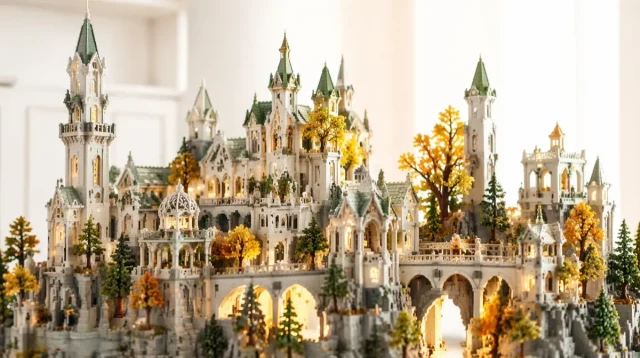
GuideIs the LEGO Rivendell Worth It? (Honest Take)
Rivendell is 6,181 pieces of elves, waterfalls, and Elrond's council chamber. Here's what actually makes it worth the shelf space, and who should just buy the poster instead.
 Guide
GuideLEGO Masters UK: The Original Show and What Happened to It
The UK version started it all in 2017, ran two series with no cash prize, then quietly stopped. Here's what happened.