

How to Store LEGO: Sorting Systems That Actually Last
Every LEGO storage system works great for about three weeks. Here's how to build one that survives contact with an actual kid, or an actual you.
If you've searched how to store LEGO before, you've probably already tried the thing that seemed obvious: one big bin, everything in it, done. It works for a while. Then the bin turns into a lucky dip where finding one specific wheel means dumping three thousand pieces onto the carpet, and the whole project of building anything starts to feel like more trouble than it's worth.
The honest version of this guide isn't a single perfect system. It's a set of tradeoffs. Sort by color and you get gorgeous drawers that are useless for finding a 2x4 brick fast. Sort by piece type and you'll be making judgment calls forever about where a weird specialty piece belongs. Don't sort at all and you're back to the bin. What actually lasts is picking a system that matches how you (or your kid) really build, not the one that looks best in a photo.
We've watched a lot of storage setups succeed and fail, both our own and the ones builders talk about constantly online. Here's what holds up over months, not just the first tidy afternoon.
The short answer
The storage system that lasts is the one that matches how you actually build, not the one that photographs best. Sort by function, size containers to the piece, label everything, and leave room to grow, and you'll spend a lot less time hunting for one specific brick.
Sort by function first, not by color
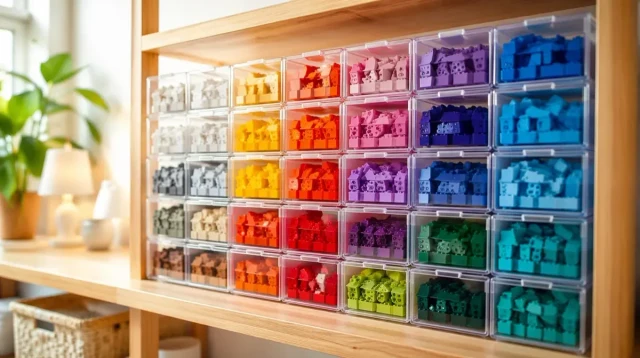
Color sorting looks incredible. It also actively slows you down while you're building, because instructions call out pieces by shape and size, not by shade. When you need a 1x2 plate, you don't want to hunt through a red bin, a blue bin, and a yellow bin to find it. You want one bin that's just 1x2 plates.
The systems that hold up longest sort by broad category first: plates, bricks, specialty and Technic pieces, minifigures and accessories, and a catch-all for the weird stuff that doesn't fit anywhere else. Within those categories, splitting further by size (small plates versus large plates) helps once a category gets big enough to need it. Save color sorting for the pieces where it actually matters, like large flat panels or big baseplates you display.
It's tempting to start with color because it's the fastest way to make a pile of loose bricks look tidy in an afternoon. But tidy and usable aren't the same thing. A rainbow of drawers photographs well and then gets abandoned the first time someone needs three specific pieces for a repair build and has to check every drawer to find them. Function-first sorting takes a bit longer to set up because you have to actually look at what a piece is before deciding where it goes, but it pays that time back every single time you sit down to build.
Match the container to the piece, not the shelf
The biggest mistake in home LEGO storage is buying one size of bin and forcing every piece to live in it. Tiny 1x1 pieces get lost in a bin sized for big Technic beams, and big pieces overflow a bin sized for studs. Small parts organizers with individual compartments (the kind sold for screws and beads) work well for minifigure heads, small specialty pieces, and anything you'd otherwise be fishing out of a pile one at a time.
Stackable drawer units earn their keep for the high-volume categories like basic bricks and plates, where you're grabbing handfuls, not individual pieces. Clear bins beat opaque ones almost everywhere, because being able to see what's inside without opening it is most of what makes a system fast to use.
Minifigures deserve their own note here, since they don't fit neatly into either category. A dedicated figure case with individual slots keeps torsos, legs, and heads from scratching against each other and losing the printed detail that makes a minifigure worth keeping in the first place. Loose accessories (the tools, weapons, and hairpieces that come with them) are small enough to disappear into a big bin instantly, so they're a good candidate for their own compartment tray rather than getting tossed in with everything else.
Label everything, even when it feels obvious
It's obvious to you today which drawer has the wheels. It won't be obvious in three months, and it definitely won't be obvious to a kid, a partner, or a helpful relative trying to put things away after a building session. A label takes ten seconds and saves you from ever having to re-sort a drawer that's slowly turned into a junk drawer because nobody knew where things belonged.
Photo labels work better than text labels for younger builders who can't read category names yet. A picture of a wheel taped to the wheel drawer does more work than the word 'wheels' ever will. For adults, plain text labels on the drawer front, not just the side, mean you can actually read them without pulling the whole unit out.
Labels also solve a problem that has nothing to do with finding pieces: they set the expectation for where things go back. A drawer with no label invites whatever's closest to hand at cleanup time, which is exactly how a carefully sorted system slides back into chaos. Once every container has a clear label, putting a piece away correctly takes the same amount of effort as tossing it in the wrong spot, and that's really the whole trick to keeping a system alive.
Keep instructions and boxes separate from loose pieces
Once a set is built and staying built, the instruction booklet and box become a different storage problem entirely. If you plan to keep sets built and displayed, file instructions in a binder or a labeled folder by set number, not loose in a drawer where they'll get bent or lost. If a set gets torn down and its pieces go back into general storage, the instructions are worth keeping too, in case you or your kid wants to rebuild it later or resell the set as complete.
Boxes are the one thing we'd tell you to let go of unless you're planning to resell a set new-in-box. They take up far more room than the pieces themselves and don't protect anything once a set is opened.
If you'd rather not keep paper at all, a lot of builders just note the set number somewhere and rely on digital instructions instead, since they're generally still available to look up long after a physical booklet would've been lost or torn. That's worth doing even for sets you plan to keep built, as a backup in case the booklet does go missing down the line.
Build a system a kid can actually maintain
A storage system only lasts as long as the person using it can keep up with it. If cleanup after a building session takes fifteen minutes of careful sorting, most kids (and plenty of adults) will just shove everything into whatever container is closest, and the system collapses within a month. The fix is fewer categories, not more. A five year old can handle three or four big bins labeled with pictures. They can't handle twenty small drawers sorted by exact piece type.
As a kid gets older and starts caring more about finding specific pieces fast for bigger builds, you can graduate to a finer system, but let that happen gradually and let them ask for it rather than imposing a complicated setup on someone who just wants to build.
It also helps to keep the everyday system separate from any prized or fragile pieces you don't want handled roughly during a fast cleanup. A rare minifigure or a delicate printed piece can go in its own small display spot up out of the general mix, so a quick sweep of loose bricks into a bin never puts it at risk. That way the bulk of the collection stays easy to tidy while the pieces that actually need care get treated differently.
Plan for growth before you need to
LEGO collections grow in bursts, usually right after a birthday or a holiday, and that's exactly when a storage system gets overwhelmed and abandoned. Leave real headroom in whatever system you build rather than filling every bin to the brim on day one. A drawer that's half full has room for the next set's pieces to go straight into the right spot. A drawer that's already packed means new pieces end up in a pile next to the system instead of in it.
It's also worth building in one flexible catch-all bin from the start, for pieces that don't fit your categories yet. Every collection has a growing pile of odd printed tiles, rare minifigure accessories, and one-off specialty pieces that don't belong anywhere clean. Fighting that reality instead of planning for it is how organized systems quietly fall apart.
A new set is also a natural checkpoint to reassess the whole system rather than just cramming its pieces wherever they'll fit. If a category has quietly outgrown its container over the last few sets, that's the moment to split it into two drawers or upgrade to a bigger bin, before it gets bad enough that finding anything in it becomes a real chore again. Treating storage as something you revisit occasionally, rather than a one-time project you set up and forget, is what actually keeps it working for years instead of months.
Common questions
Should I sort LEGO by color or by piece type?
Piece type first, almost always. Instructions call out pieces by shape and size, so sorting that way makes actual building faster. Color sorting looks great on a shelf but slows you down mid-build, since you'd have to check multiple color bins to find one shape. Save color-based sorting for display pieces or large flat panels where the shade genuinely matters.
What's the best container for small LEGO pieces?
Small parts organizers with individual compartments, the kind made for screws or beads, work best for tiny pieces like 1x1s, minifigure accessories, and specialty parts you'd otherwise lose in a bigger bin. For higher-volume categories like basic bricks and plates, stackable clear drawers handle handfuls better than compartment trays do.
How do I get my kid to actually put LEGO away?
Keep the system simple enough for their age. A handful of big, picture-labeled bins beats a finely sorted drawer setup that takes real effort to maintain. If cleanup feels like a chore with too many decisions, most kids will just dump everything into the nearest container, so fewer categories usually means a system that actually survives.
Is it worth keeping the original boxes?
Generally no, unless you're planning to resell a set new and sealed. Boxes take up far more space than the pieces inside and don't protect a built or loose set once it's opened. Instructions are worth keeping though, filed by set number, in case you want to rebuild the set later or need them for a resale listing.
Related articles
 Guide
GuideWhere to Watch LEGO Masters (US, Canada, UK, Australia)
A country-by-country guide to legally streaming LEGO Masters US and the Australian spinoff, plus the real story on the UK version and season 6.
 Guide
GuideIs the LEGO Rivendell Worth It? (Honest Take)
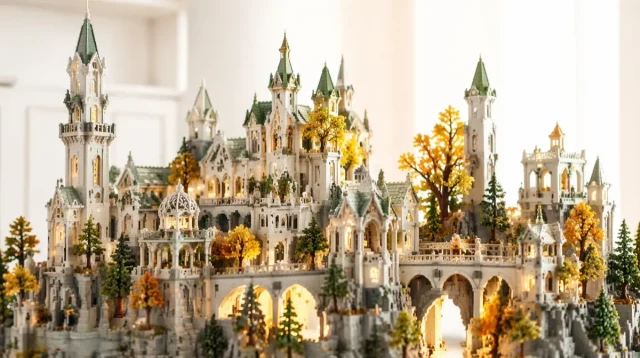
Rivendell is 6,181 pieces of elves, waterfalls, and Elrond's council chamber. Here's what actually makes it worth the shelf space, and who should just buy the poster instead.
 Guide
GuideLEGO Masters UK: The Original Show and What Happened to It
The UK version started it all in 2017, ran two series with no cash prize, then quietly stopped. Here's what happened.