

Is the LEGO Eiffel Tower Worth It? (Honest Take)
The LEGO Eiffel Tower is 10,001 pieces of one very tall, very repetitive lattice. Here's who should build it and who should walk past it in the store.
If you've searched is the LEGO Eiffel Tower worth it, you've probably already stood in front of the box at a store and done the math on the piece count. This is the LEGO Icons Eiffel Tower (set 10307), and at 10,001 pieces it's one of the largest sets LEGO has ever released. That number alone tells you most of what you need to know before you even open the box: this is not a weekend project, and it's not really a kid's set either.
We want to walk through what the build actually feels like, what it looks like once it's standing, and where the real trade-offs are, because a set this size and this expensive deserves more than a shrug and a five-star rating. There's a specific kind of builder this set is perfect for, and a specific kind of builder who should spend their money somewhere else.
The short answer
The LEGO Eiffel Tower is worth it if you already know you like long, repetitive, meditative builds and you have real floor-to-ceiling space to display something over a meter tall. It's not worth it as an impulse buy or a first big set. Get the space and the patience sorted first, and the actual build will reward you.
What you're actually building
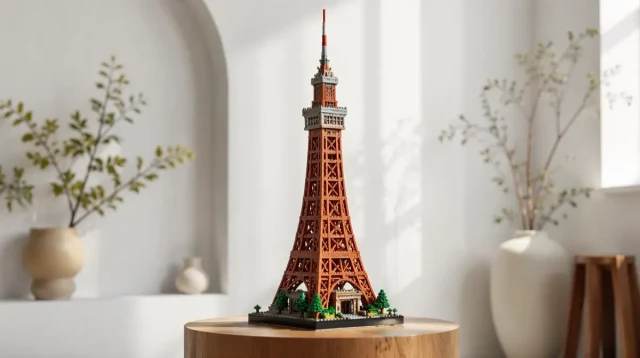
The LEGO Eiffel Tower recreates the Paris landmark as a tapering lattice structure, built almost entirely from small technic-style beams and pins rather than traditional bricks. That's the part people don't expect going in. This isn't a wall-building set where you snap large panels together and watch the model grow fast. It's thousands of small connections, repeated in bands as the tower narrows toward the top, and the technique is closer to building a scale engineering model than a display set.
The box splits the build into numbered bags grouped roughly by section, so you work your way up from the four splayed legs at the base, through the first and second platforms, and finally into the long tapering antenna mast at the very top. Each section has its own small personality. The base has the widest stance and the most visible curve work, the mid-section is where the lattice really tightens up, and the top is thin enough that the last few stages feel almost delicate compared to everything before them.
The finished model stands well over a meter tall, which is the whole appeal and also the whole logistical problem. You need a spot for it that isn't going to get bumped, knocked, or dusted constantly, and you need to think about that before you start, not after you've got four hours into the first stage. Moving a partially built tower once it's a few feet tall is its own small ordeal, so pick your build location with the finished height already in mind.
The build experience: repetitive, not hard
Here's the honest part. The Eiffel Tower isn't a difficult build in the sense of tricky techniques or confusing instructions. It's a long build made of the same handful of moves done over and over as the lattice climbs. The first few stages at the base are genuinely interesting, since that's where the arches and the structural cross-bracing come together and you can see the engineering logic. The middle stretch, the long tapering shaft, is where a lot of builders start to feel the repetition. You're doing the same beam-and-pin pattern dozens of times in a row, and unlike a themed set with distinct rooms or characters to look forward to, there's no new scene waiting at the next stage to break up the rhythm.
What keeps that from being a dealbreaker is the visible progress. Even in the repetitive middle, you can watch the tower actually get taller with each bag, and that's a different kind of payoff than a licensed set gives you. It's less about the next reveal and more about the tower simply growing under your hands, which some builders find more satisfying, not less.
If you love the meditative side of building (put on a podcast, work through a bag at a time, don't rush it) this is exactly your kind of set. If you build for the payoff of watching something transform quickly, the middle third will drag on you. Plan for this to take multiple sessions across days or weeks, not one sitting, and don't feel bad about setting it aside for a few days between stages. The tower isn't going anywhere.
How it displays once it's done
This is where the set earns its reputation. Once assembled, the tower's taper and the visible ironwork detail actually read as the Eiffel Tower from across a room, which isn't true of every large-scale LEGO landmark. The antenna at the top and the base arches give it real presence, and the model rewards being seen from a few feet back rather than up close, since some of the individual connections look a little sparse under close inspection. Lighting helps a surprising amount here too. A tower this tall and this detailed catches shadows differently depending on where it sits relative to a window or a lamp, and builders who've thought about placement tend to end up happier with how it photographs and displays than those who just found floor space and called it done.
The catch is height. At over a meter tall, this isn't going near shelves with low ceilings, near a door that gets bumped, or anywhere pets or small kids can reach. Buyers who build this and then realize they don't have a real spot for it are the most common source of buyer's remorse we hear about with this set, more than the price or the build time. It's worth measuring your intended spot with a tape measure before you order, not after the box arrives. A meter is taller than most people picture in their head, and a table lamp or a bookshelf that looked like plenty of clearance in your mind's eye sometimes isn't.
Who this set is actually for
This is an adult-builder set, full stop. The piece count, the technique, and the display footprint all point the same direction. If you're an experienced builder who's already worked through a few large Icons sets and you like architectural or engineering-style builds over minifigure play, the Eiffel Tower is a strong pick. It's also a good gift for someone who's been to Paris or has a personal connection to the landmark, since that context makes the hours of building feel worthwhile in a way pure piece count doesn't. We'd also point it toward builders who enjoy the display-model side of the hobby generally, the crowd that already owns a car engine set or an architectural landmark or two and wants something bigger to anchor the collection.
It's a poor pick as a first big LEGO set. If someone hasn't built anything in the 2,000 to 3,000 piece range before, jumping straight to 10,001 pieces of repetitive lattice work is more likely to end in a half-finished box in a closet than a proud display piece. Start smaller, then work up to this one. It's also not a great choice for a builder who mainly wants a toy to play with once it's finished, since there's no play pattern here beyond looking at it. There are no minifigures, no moving parts beyond the static structure, and no scenes to act out. What you get at the end is exactly what you see on the box, scaled up, and nothing more.
The value question
LEGO doesn't publish a retirement calendar, so we won't tell you exactly when this set is leaving shelves. What we can say is that large Icons sets in this line typically get reported as retired or hard to find sometime after a few years on the market, and price tends to drift upward once that happens. If you've been eyeing this one and you know you're the kind of builder who'll actually finish it, buying while it's in active production and easy to find is the safer move than waiting.
On pure piece count, the cost per piece on a set like this tends to land in a reasonable range compared to other large Icons sets, since bigger sets generally scale better than small ones. That said, piece count isn't the only cost. Factor in the shelf space, the time commitment, and whether you have somewhere safe to keep something this tall standing long term.
What we'd tell a friend
If someone asked us straight up whether to buy this, the question we'd ask back is: do you already know you like long, repetitive builds, and do you have a real spot for a meter-tall tower that won't get knocked over? If yes to both, buy it and enjoy the process, because the finished piece is genuinely impressive and the kind of thing that gets pointed out to guests. If you're on the fence about either one, this isn't the set to test that on. There are smaller Icons landmark sets that give you a taste of the style without the same time and space commitment.
We'd also say this: don't buy it purely because of the piece count bragging rights. A 10,001 piece box is an easy thing to be impressed by in a store, but the number doesn't tell you anything about whether you'll actually enjoy the hours it takes to get there. Buy this one for the finished tower standing in your home, not for the number on the front of the box.
Common questions
How long does the LEGO Eiffel Tower take to build?
It depends heavily on pace, but expect this to stretch across multiple sessions rather than a single afternoon. Builders who work through it in shorter daily sittings tend to enjoy it more than those who try to power through in one long marathon, since the repetitive lattice sections benefit from breaks.
Is the LEGO Eiffel Tower good for display in a small room?
Only if you have vertical clearance. The finished model stands over a meter tall, so a small room isn't automatically a problem, but a low shelf or a spot near foot traffic is. Measure your intended spot before you buy, not after you've built it.
Is the Eiffel Tower a good LEGO set for a beginner?
No. It's better suited to builders who've already completed a few large sets and know they enjoy long, repetitive builds. First-time large-set builders are better off starting with something in the 2,000 to 4,000 piece range and working up to this one.
Does the LEGO Eiffel Tower come with a base or plaque?
The set includes a base structure as part of the build itself, integrated into the model rather than a separate display stand. There's no additional lighting or motorized element included, so what you see is the static architectural model.
Related articles
 Guide
GuideWhere to Watch LEGO Masters (US, Canada, UK, Australia)
A country-by-country guide to legally streaming LEGO Masters US and the Australian spinoff, plus the real story on the UK version and season 6.
 Guide
GuideIs the LEGO Rivendell Worth It? (Honest Take)
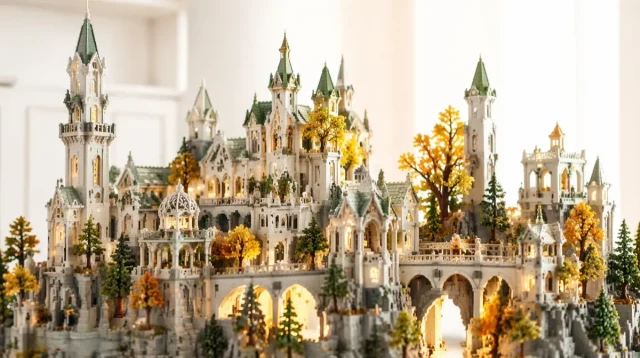
Rivendell is 6,181 pieces of elves, waterfalls, and Elrond's council chamber. Here's what actually makes it worth the shelf space, and who should just buy the poster instead.
 Guide
GuideLEGO Masters UK: The Original Show and What Happened to It
The UK version started it all in 2017, ran two series with no cash prize, then quietly stopped. Here's what happened.