

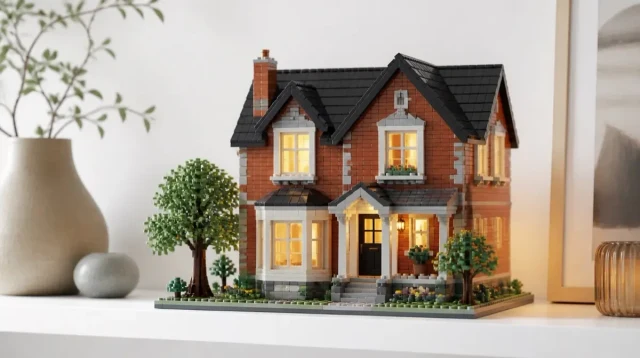
Is the LEGO Home Alone House Worth It? (Honest Take)
The McCallister house is a huge, funny, faithful build, but it takes real shelf space and real patience. Here's who should actually buy it.
If you've spent any time looking at the LEGO Home Alone house, you already know the pitch: a full recreation of the McCallister family home, booby traps and all, built from thousands of pieces under the LEGO Ideas banner. The question people actually search for is simpler than the marketing copy. Is the LEGO Home Alone house worth it, or is this one of those licensed sets that looks great in photos and disappoints on the table?
We want to answer that honestly rather than just list features, because this set (21330) asks a lot of you. It's a serious commitment in pieces, in build time, and in the square footage it wants once it's finished. That's not a knock. Some of the best display sets in the LEGO Ideas line ask exactly this kind of commitment, and the payoff is a model that actually earns its spot on a shelf instead of just filling one. The trick is figuring out, before you buy, whether you're the kind of builder and the kind of household this set was made for.
Below we'll walk through what the build is actually like, what the finished house does well, where it struggles, and who should think twice before adding it to a cart.
The short answer
The LEGO Home Alone house rewards fans who want a detailed, room by room recreation of the movie and have the shelf space and patience to match. It's not a fast build or a casual purchase, and it's not built for solo kid builders. If that description fits you, it's an easy set to recommend.
What you're actually building
The LEGO Home Alone house is a LEGO Ideas set, which means it started life as a fan design and went through LEGO's review process before becoming an official product. That lineage matters here, because Ideas sets tend to prioritize accuracy and cleverness over easy building, and this one is no exception. At 3,955 pieces, it's built across multiple floors, each one furnished to match specific rooms from the movie: the front hall, the kitchen, the basement, Kevin's bedroom, the attic. The traps are worked into the build itself rather than tacked on afterward, so you're not just building a house, you're building a house that tells a story room by room.
That level of detail is the whole appeal, but it also means the instructions ask for real attention. This isn't a set you casually assemble while half watching television. Expect to set aside real, focused sessions, plural, to get through it.
It also helps to know what kind of set this is before you open the box. This is a licensed, story driven Ideas build, not a straightforward City or Creator house. LEGO's Ideas line exists specifically for projects like this one, where the point is honoring a very specific piece of pop culture down to the room layout, not designing the easiest possible building experience. Once you frame it that way, the pace and the density of small parts make a lot more sense.
The build experience, floor by floor
Multi-floor display houses live and die on how well the transitions between floors work, and this one handles it better than most. Each level connects cleanly enough that you can build in stages and check your progress against the room you just finished, which helps on a set this long. Where it drags is in the repetitive furnishing work: railings, small wall details, and the sheer number of tiny household objects that make the rooms feel lived in. Builders who love that kind of fussy detail work will be delighted. Builders who just want to see a big model come together fast will feel the pace slow around the middle stretch.
The reveal moments are real, though. The traps clicking into their built positions, the staircase, the attic access, all of it lands the way a good LEGO Ideas set should: you feel the design team's affection for the source material in the choices they made, not just in the box art.
Sorting is its own small project here. With a build this large, separating pieces by bag and by floor before you start saves real time later, especially once you're deep into a room full of near identical small parts. Builders who skip that step tend to lose momentum hunting for one specific piece in a pile, which is the kind of thing that turns a long build into a frustrating one for no good reason.
Size, weight, and where it actually lives
This is the part people underestimate. A nearly 4,000 piece house is heavy, and it's tall enough that it needs a stable, dedicated surface, not a crowded shelf where it'll get bumped. Before you buy, measure the spot you have in mind and be honest about whether it can hold a large, top heavy display model long term. A lot of buyer regret with sets this size has nothing to do with the build and everything to do with realizing afterward there's nowhere good to put it.
If you're tight on display space, that's a real strike against this set regardless of how much you love the movie. A smaller Ideas set or a display case piece will serve you better than a house you have to keep moving out of the way.
Worth thinking about too: this isn't a set you tuck away in a closet between viewings. Once it's built, moving it around risks knocking loose the smaller detail pieces on each floor, so most owners pick a permanent spot and leave it there. If you like to rearrange your shelves seasonally, plan around the fact that this one wants to stay put.
Who this set is actually for
The clearest yes is a longtime Home Alone fan who also enjoys detailed, slow builds and has a permanent spot to display the finished house. If that's you, the level of room by room accuracy here is the kind of thing you'll notice and appreciate every time you walk past it, long after the building itself is done.
The clearer no is a casual fan buying this mostly for the nostalgia hit, or a parent hoping a kid will build it solo. The piece count and the fiddly detail work put this well outside the range of a first big build, and a builder who isn't already invested in the house-as-diorama concept will likely find the middle stretch tedious rather than absorbing.
There's a middle group worth mentioning too: adult builders who like large Ideas sets in general but aren't especially attached to Home Alone specifically. For that group, the appeal comes down to the architecture and the room-by-room craftsmanship more than the movie itself, and that's still a reasonable way to enjoy this set. Just know you're paying for the license either way, so it helps if the source material means something to you.
Where it falls short
No set this size is flawless. Some of the smaller decorative elements repeat more than you'd like for a set at this scale, and a few of the traps are more suggested than fully recreated once you know exactly what to look for. It's also, fundamentally, a static display piece rather than a play set. There's no rebuilding it into something else, no alternate model, just the one house, built once and displayed indefinitely.
That's fine if a display centerpiece is what you wanted. It's worth naming clearly, though, for anyone expecting a more interactive experience once the building is done.
It's also worth saying plainly that the value of all that interior detail depends on being able to actually see it. A house built to be admired room by room loses some of its appeal if it ends up pushed against a wall where only the front is visible. Give some thought to how you'll angle it once it's finished, not just where it will sit.
Availability and the retirement question
LEGO doesn't publish a retirement calendar, so we can't tell you an exact date this set will disappear from shelves. What we can say is that LEGO Ideas sets typically have a defined run before they're retired, and licensed, story driven pieces like this one tend to become harder to find once LEGO moves on to the next Ideas release. If you've been sitting on the fence for a while and the price feels fair to you, that's a reasonable nudge to stop waiting rather than a reason to panic buy.
Once a set like this does retire, secondhand prices for a complete, sealed box typically climb rather than fall, especially for a licensed Ideas set with a built-in fan base. That's not a reason to rush a purchase you're not sure about, but it's a useful data point if you're debating whether to grab it now at retail versus hoping to find it later.
The bottom line on value
Value here isn't just pieces per dollar, it's whether the specific thing this set does (a faithful, detailed recreation of a beloved movie house) is something you'll actually enjoy owning once the last brick is placed. Judged as an Ideas set built for fans who want to relive the film room by room, it delivers. Judged as a quick, satisfying weekend build, it will feel long. Go in knowing which experience you're signing up for and this is a set that's easy to be happy with.
If you're comparing it against other big licensed Ideas sets, weigh how much you actually care about this specific movie. The piece count and detail work are similar to plenty of large sets in the line, but the emotional payoff here is tied directly to how much the McCallister house means to you. Buy it because you love Home Alone, not because it's simply the biggest, splashiest thing in the catalog that week.
Common questions
How long does the LEGO Home Alone house take to build?
Expect several sittings rather than one afternoon. At close to 4,000 pieces with a lot of small furnishing detail across multiple floors, most builders spread this out over a few sessions rather than finishing in one go. Rushing it tends to make the repetitive detail work feel worse, so plan for a slower, more deliberate pace than you would with a smaller set.
Is the LEGO Home Alone house good for kids?
It's better suited to teens and adults, or to a parent and kid building together, than to a young solo builder. The piece count and the amount of fine detail work put it well past what most kids can manage alone, and a lot of the appeal (spotting specific movie references room by room) lands better with an older fan of the film anyway.
Does the LEGO Home Alone set include minifigures of the movie characters?
Yes, the set includes minifigures tied to the film's main characters, which is part of what makes it feel like a faithful recreation rather than just a generic house. The figures are scaled to fit inside the built rooms for display and photos rather than being designed for active play.
Is the LEGO Home Alone house worth it compared to other LEGO Ideas sets?
It depends on what you value in an Ideas set. If you want maximum detail and a strong tie to a specific piece of pop culture, this one delivers more of that than most. If you'd rather have a build that finishes faster or displays in a smaller footprint, other Ideas sets in the lineup will suit you better.
Related articles
 Guide
GuideWhere to Watch LEGO Masters (US, Canada, UK, Australia)
A country-by-country guide to legally streaming LEGO Masters US and the Australian spinoff, plus the real story on the UK version and season 6.
 Guide
GuideIs the LEGO Rivendell Worth It? (Honest Take)
Rivendell is 6,181 pieces of elves, waterfalls, and Elrond's council chamber. Here's what actually makes it worth the shelf space, and who should just buy the poster instead.
 Guide
GuideLEGO Masters UK: The Original Show and What Happened to It
The UK version started it all in 2017, ran two series with no cash prize, then quietly stopped. Here's what happened.