

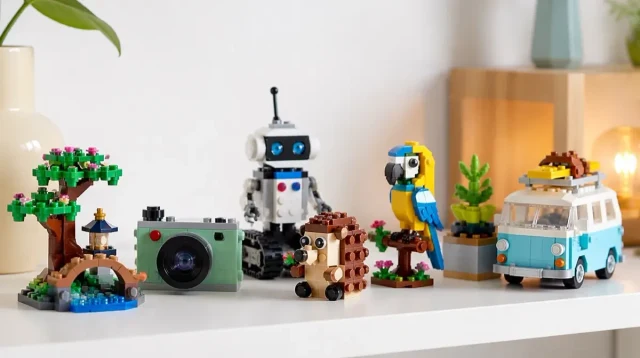
LEGO Alternatives for Kids That Will Not Disappoint
LEGO® sets aren't the only bricks worth buying. Here's what actually holds up as a building toy, and what to skip.
Every parent hits this moment eventually. A kid loves building, the birthday list is getting long, and the LEGO aisle has started to feel expensive for what you get in the box. So you start looking at LEGO alternatives for kids, and the search results are a mess of no name brick tubs, magnetic tile sets, and wooden block kits that all promise to be just as good for a fraction of the price. Some of them are genuinely great. A lot of them are not.
We're not here to tell you LEGO is the only option, because it isn't. We're here to tell you what actually works, what to watch for, and where the corners get cut on cheaper alternatives. Piece tolerance, clutch power, and small part safety are not marketing fluff. They're the difference between a toy that gets played with for years and one that gets stepped on once and buried in a closet.
This guide walks through the real categories worth considering, from brick systems that click into official LEGO pieces to magnetic tiles, wooden blocks, and STEM kits built for a different kind of building brain. None of this is about brand loyalty. It's about matching the toy to the kid.
The short answer
There's no single best LEGO alternative, only the right category for the kid in front of you. Match the toy to the age, the hands, and the kind of building that actually holds their attention, and check real compatibility and durability claims before trusting a piece count on a box.
Why parents go looking for alternatives
The most common reason is cost. A big themed set can run well past what a family wants to spend on one gift, and a shelf of alternatives promises the same volume of pieces for less. The second reason is age fit. Standard LEGO bricks are small, and a toddler or a preschooler needs something chunkier that won't end up in a mouth or a nostril. The third reason is just variety. Some kids are drawn to color and shape more than tiny detailed builds, and a magnetic tile or a wooden block set can hit that differently than a brick does.
None of these reasons mean LEGO is bad. It means different kids, ages, and budgets call for different tools. Worth saying up front: quality varies wildly between alternative brands, and the cheapest option in a category is rarely the best one.
Compatible brick systems
This is the category most people mean when they say LEGO alternative. These are brick sets built to the same stud spacing as official LEGO pieces, so they click into an existing collection instead of starting a separate one. When they're made well, a kid genuinely cannot tell the difference by feel. When they're made poorly, the clutch power is weak, pieces pop apart mid build, or the studs don't line up cleanly with real LEGO bricks.
The tell is usually in the reviews, not the box. Look for language about how the bricks hold together and whether they fit official sets, not just piece count. A tub of a thousand loose bricks sounds generous until half of them are odd shapes nobody uses and the connection is mushy enough that a build sags under its own weight. If a kid already has a real LEGO collection, a compatible brick set only pays off if it actually plays nice with what's already in the bin.
Magnetic tiles for a different kind of builder
Magnetic tiles solve a problem bricks don't. They build fast, they build big, and a five year old can put together something room sized in twenty minutes without fine motor frustration. Kids who get impatient with tiny pieces and stud alignment often light up with tiles because the payoff is immediate and the shapes snap together at any angle, not just straight up and down.
The tradeoff is that tiles are a different skill than bricks. They build shells and structures, not detailed models with moving parts or minifigure scale detail. Some kids want both, and that's fine. Tiles are also worth a second look for siblings with a wide age gap, since a four year old and an eight year old can build the same tile structure together in a way that's harder to do with a detailed brick set built for older hands.
Wooden and chunky blocks for the youngest builders
For toddlers and young preschoolers, standard bricks are genuinely the wrong tool, not just a preference. The pieces are a choking hazard at that age, and the fine motor demand of pressing small studs together is more frustrating than fun for hands that haven't developed that grip strength yet. Wooden unit blocks, chunky interlocking blocks sized for small hands, and simple stacking sets do the actual job better at this age: they build spatial reasoning and balance without demanding precision a toddler doesn't have yet.
This isn't really a competitor to LEGO so much as a different life stage. Most families move from chunky blocks into standard bricks somewhere around age four or five, once the pincer grip and patience catch up. Buying LEGO for a two year old usually means buying a toy that sits unused for a year or two before it gets any real play.
STEM and engineering kits
A different group of alternatives leans into gears, motors, and mechanical building rather than brick aesthetics. These kits are built for kids who want to see something move, not just see something built. They tend to include axles, gear ratios, and simple motorized components, and they reward a kid who likes taking things apart to see how they work.
These are worth calling out separately from bricks because the appeal is different. A kid who loses interest in following brick instructions step by step sometimes lights right up with a kit built around function over form. It's not a downgrade from LEGO Technic, it's a different entry point into the same instinct: wanting to build something that does something.
Character and roleplay building lines
Playmobil and similar figure-first lines sit in their own lane. The building is lighter and the play is heavier on story and character, with figures that have more range of motion and expression than a minifigure does. For a kid who cares more about the story they act out after the box is opened than the process of building it, a figure heavy line can be the better fit even if it means fewer building steps.
This matters because parents sometimes assume every building toy needs to be judged on the same scale as a brick set. It doesn't. If a kid spends more time playing pretend with the finished scene than building it, the actual building complexity matters less than how good the figures and props are to hold and pose.
What to actually check before you buy
Skip the piece count on the box and look for three things instead. First, age labeling that matches the actual piece size, since a tiny piece for a toddler is a real safety issue and not just a preference. Second, real reviews that mention how well pieces hold together over repeated building and rebuilding, since that's where cheap alternatives fall apart fastest. Third, whether the set is meant to stand alone or connect to something the kid already owns, because a set that doesn't mesh with an existing collection effectively starts a second, separate toy category in the house.
Price matters, and there's no reason to feel like the official brand is the only acceptable choice. But the goal with any of these categories is the same: a toy that survives more than one afternoon of play and actually matches how that specific kid likes to build.
Common questions
Are LEGO compatible bricks actually compatible?
It depends entirely on the brand and manufacturing quality. Well made compatible bricks click into official LEGO pieces with similar clutch power, while cheaper ones often have looser tolerances that make builds wobbly or cause pieces to separate. Check reviews specifically for compatibility and hold strength before assuming a brand works with an existing collection.
What age should kids move from wooden blocks to standard bricks?
Most kids make that shift somewhere around four to five years old, once fine motor control and patience for stud alignment develop. It varies by kid, so watch for frustration rather than following the age blindly. A child who gets upset pressing small pieces together typically isn't ready yet, regardless of what the box says.
Are magnetic tiles worth it if a kid already has LEGO?
Often yes, because tiles build a different skill and satisfy a different kind of play than bricks do. They're especially useful for younger siblings or for building large structures fast. Think of them as a complement rather than a replacement, since most kids who like one also enjoy the other for different moods.
Do STEM building kits require adult help to use?
Simpler gear and motion kits are usually fine for kids to run on their own after an initial build, while more advanced motorized or programmable kits typically benefit from a parent nearby for the first setup. After that, most kids who are drawn to this category enjoy figuring out the mechanics independently.
Related articles
 Guide
GuideWhere to Watch LEGO Masters (US, Canada, UK, Australia)
A country-by-country guide to legally streaming LEGO Masters US and the Australian spinoff, plus the real story on the UK version and season 6.
 Guide
GuideIs the LEGO Rivendell Worth It? (Honest Take)
Rivendell is 6,181 pieces of elves, waterfalls, and Elrond's council chamber. Here's what actually makes it worth the shelf space, and who should just buy the poster instead.
 Guide
GuideLEGO Masters UK: The Original Show and What Happened to It
The UK version started it all in 2017, ran two series with no cash prize, then quietly stopped. Here's what happened.