

LEGO Icons vs Creator Expert: What Changed?
LEGO Icons vs Creator Expert isn't really a build-quality question, it's a branding one. Here's what actually shifted and what to expect from a set wearing either name.
If you've been out of the hobby for a few years and come back to find the shelf tag says Icons instead of Creator Expert, you're not imagining things. LEGO retired the Creator Expert name and folded most of that lineup, plus a few other adult-skewing lines, into a single Icons theme. The question we hear most, lego icons vs creator expert, usually isn't really about bricks at all. It's about whether the sets got worse, better, or just relabeled.
The short version: the sets themselves didn't change much overnight. What changed is the box, the branding, and a bit of the range it covers. Icons is a wider tent than Creator Expert ever was, and that has real consequences for what you can expect when you pick one up.
We'll walk through what Creator Expert actually was, what Icons absorbed, and where the real differences show up if you're choosing between an older Creator Expert set and a newer Icons one.
The short answer
LEGO Icons vs Creator Expert is mostly a story about a name change and a wider net, not a quality drop or a secret upgrade. The flagship builds still get the same careful treatment they always did. Judge any individual set on its own merits, piece count, and photos rather than leaning on which theme name happens to be printed on the box.
What Creator Expert used to mean
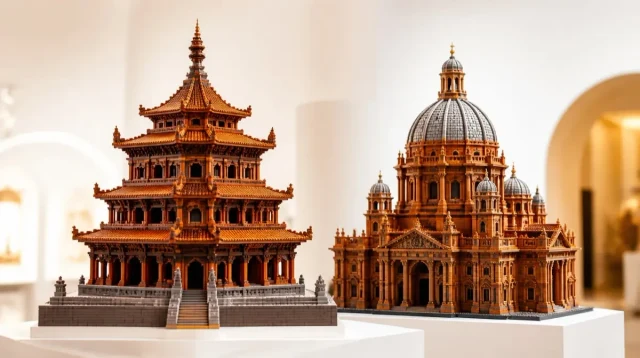
Creator Expert was LEGO's adult-focused build line for years, home to the modular buildings, the big vehicle replicas, and a run of large architectural models. The name did real work: it told you a set was aimed at experienced builders, usually with a higher piece count, more refined detailing, and a display-first design rather than a play-first one. If a set had that gold Creator Expert badge, you generally knew what you were getting into before you read a single review.
The line wasn't huge. It was a steady trickle of releases each year, often one or two modular buildings, a handful of vehicles, and the odd surprise. That scarcity was part of the appeal. Creator Expert felt like a curated shelf, not a wide catalog, and builders tended to plan their year around whichever one or two releases were coming rather than picking from a long list of options at any given time.
It also had a house style you could spot from a photo alone. The modular street buildings in particular built up a shared visual language: brick-built signage, working shutters, a ground floor shop with a distinct trade, and upper floors with their own little scenes. Builders who collected the line weren't just buying individual sets, they were building a street, one release at a time, and that slow-drip release schedule is part of what made the theme feel special rather than routine.
Why LEGO created Icons
LEGO introduced Icons as an umbrella theme that folded in Creator Expert along with sets that used to sit in other adult-collector corners of the catalog, like some of the LEGO Art sets and other display-oriented releases that didn't fit neatly under Creator Expert's old rules. The stated idea, reported at the time, was to give adult builders one clear place to look instead of hunting across several loosely related themes.
From a shopping standpoint, that's genuinely useful. Before Icons, a builder looking for a big centerpiece set might have to check Creator Expert, Ideas, Art, and a couple of licensed lines separately. Icons is meant to be the one shelf tag that says "this is a build for grown-up builders" regardless of which older theme it would have lived in.
There's a marketing angle here too, and it's fair to name it. Creator Expert had built a loyal following, but the name itself never quite clicked with casual shoppers browsing in a store. "Icons" is a plainer word, easier to put on a box and easier to search for online, and consolidating several smaller themes under one recognizable label makes the whole adult-builder segment easier for LEGO to market as a single destination rather than a scattered set of niches.
What actually changed in the sets themselves
Here's the part that reassures most returning builders: the design philosophy carried over largely intact. Icons sets still lean toward realistic proportions, restrained color palettes, and building techniques meant to be admired up close, not just from across a room. A modular building released under Icons reads the same way a modular building released under Creator Expert did: same attention to interior detail, same focus on facade texture, same expectation that you'll display it rather than play with it.
What has shifted is range and pace. Icons covers more ground than Creator Expert did, including some licensed vehicle and pop-culture sets that wouldn't have fit the old branding, and LEGO has typically released more Icons sets per year than Creator Expert ever saw. More output means more variety, but it also means the theme covers a wider spread of ambition, from small desk pieces to enormous multi-thousand-piece builds, under one name.
The modular building sub-line is the clearest through-line to watch if you want an apples-to-apples comparison. New modular releases under Icons still follow the same street-scale footprint, the same interior-first approach, and the same annual cadence collectors got used to under Creator Expert. If you want proof the design DNA didn't change, that sub-line is where to look first, because it's the one part of the old theme that carried its identity over almost untouched.
The branding shift, not a quality shift
It's worth being blunt about this because it's the part people get wrong: Icons isn't a downgrade of Creator Expert, and it isn't automatically an upgrade either. It's a rename and a widening. The engineering teams behind the modular buildings and big vehicle replicas are largely the same teams that worked under the Creator Expert name, and the quality bar for a flagship Icons set is comparable to what Creator Expert set.
Where buyers sometimes get tripped up is assuming every Icons set carries that flagship-level polish just because of the badge. Because the theme is broader now, you'll find Icons sets that are closer to a nice display piece than a marquee build. Reading the piece count and looking at actual photos of the finished model still matters more than the theme name alone.
Think of it the way you'd think about a magazine that widens its scope. The flagship features are still written by the same senior staff and held to the same bar, but the section around them has more filler pages than it used to. That's not a knock on the flagship content, it's just a reason to read the table of contents before assuming everything inside is equally weighty.
Retired sets and what happens to older Creator Expert models
Sets carrying the old Creator Expert branding are no longer being produced, and LEGO doesn't publish a public retirement calendar, so exact end dates for any given set are never something we can state as fact. What's generally true, and widely reported by collectors, is that once a set sells through retailer stock, it typically doesn't get restocked, and secondary market prices tend to climb from there, sometimes considerably for the more sought-after modular buildings.
If you already own Creator Expert sets, nothing changes for you. They're not being recalled or reissued under a new name, they simply become part of LEGO's back catalog, the same way earlier Creator (non-Expert) or Advanced Models sets did before them.
This is also why you'll see Creator Expert boxes still floating around in stores and marketplaces well after Icons became the current branding. Retail sell-through isn't instant, and older stock can sit on shelves for a while, especially at big-box retailers that ordered in bulk before the rename. Finding a Creator Expert box today doesn't mean anything odd happened, it just means that particular set hasn't fully cycled out of the supply chain yet.
How to choose between an older Creator Expert set and a newer Icons set
If you're deciding between a Creator Expert set still on shelves or clearance and a brand-new Icons release in a similar category, treat them as equals and compare on the things that actually matter: piece count relative to price, the build experience described in reviews, and whether the finished model fits the space and display style you want. Don't assume the newer name means a newer or better engineering approach, because in most cases it doesn't.
The one place the branding does help is search and discovery. If you're hunting for adult-oriented display sets today, starting with the Icons theme page is a faster way to survey what's currently available than trying to remember which older sub-theme a set might have lived under.
One more practical note: if you're comparing a discounted Creator Expert set against a full-price Icons set in the same rough category, don't let the older branding make the discount feel like a red flag. A lower price on a retiring set is normal retail behavior, not a sign that the set itself is inferior. Weigh the actual build and display value on both, and let the branding be the least important line in your decision.
Common questions
Is LEGO Icons the same as Creator Expert?
Functionally, yes for most of the lineup. LEGO retired the Creator Expert name and moved that catalog, plus some other adult-collector sets like certain LEGO Art pieces, under the new Icons theme. The design approach carried over. Think of it as a rebrand and a widening of scope rather than a replacement line with different goals.
Are LEGO Icons sets lower quality than Creator Expert?
No, not as a rule. Flagship Icons sets, like modular buildings and large vehicle replicas, come from the same design tradition as Creator Expert and hold to a similar quality bar. Because Icons covers a wider range of sets than Creator Expert did, though, you'll see more variation in scale and ambition across the theme, so it's worth checking piece count and photos rather than assuming based on the name alone.
Will Creator Expert sets still work with new Icons sets?
Yes. There's no compatibility change involved in the rebrand. Modular buildings from the Creator Expert era still connect with newer Icons modular buildings on the same street-scale footprint, and general building techniques haven't shifted in a way that would make older and newer sets feel out of place next to each other.
Should I buy an old Creator Expert set before it's gone?
If there's a specific Creator Expert set you want and it's still available at a fair price, there's a real case for buying now rather than later. LEGO doesn't announce retirement dates, but once a set sells through, restocking typically doesn't happen, and secondary market prices for retired sets, especially popular modular buildings, tend to climb over time.
Related articles
 Guide
GuideWhere to Watch LEGO Masters (US, Canada, UK, Australia)
A country-by-country guide to legally streaming LEGO Masters US and the Australian spinoff, plus the real story on the UK version and season 6.
 Guide
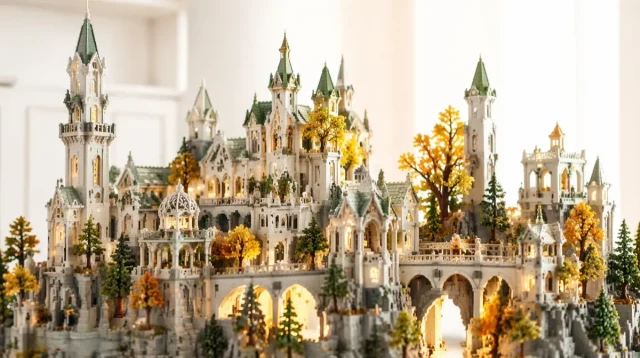
GuideIs the LEGO Rivendell Worth It? (Honest Take)
Rivendell is 6,181 pieces of elves, waterfalls, and Elrond's council chamber. Here's what actually makes it worth the shelf space, and who should just buy the poster instead.
 Guide
GuideLEGO Masters UK: The Original Show and What Happened to It
The UK version started it all in 2017, ran two series with no cash prize, then quietly stopped. Here's what happened.