

When Do LEGO Sets Retire? (How Retirement Actually Works)
There's no public countdown clock for any LEGO set. Here's what actually drives retirement, and how to read the signs before a set disappears from shelves.
Every few months someone posts a screenshot of a set marked "last chance" on a retailer site, and the comments fill up with people asking the same question: when do LEGO sets retire? The honest answer is that nobody outside the LEGO Group knows a set's exact retirement date ahead of time, because the company doesn't publish a retirement calendar. What we do have is years of reported patterns from fan sites, retailer stock behavior, and the way LEGO itself talks about its portfolio, and those patterns are consistent enough to be genuinely useful.
This isn't a guide about which sets to buy for investment. It's about the mechanics: what "retired" actually means, roughly how long a typical set stays in production, and what signals tend to show up before a set quietly vanishes from the shelf. If you're trying to time a purchase, or just trying to understand why a set you loved as a kid is impossible to find new anymore, this is the plumbing behind it.
I'll also be upfront about the limits here. Nothing below is a promise about any specific set's future, and I'm not going to hand you a date. What follows is how retirement actually tends to play out, based on what LEGO has said publicly and what's been reported over and over by people who track this stuff closely.
The short answer
Retirement is a real, gradual process, not a single announced date, and LEGO doesn't publish a calendar for it. The most useful thing you can do is watch stock status on LEGO's own site and read the pattern of discounts and lineup refreshes rather than chasing a rumored date. If a set you want is in front of you at a fair price, that's the signal that actually matters.
What "retired" actually means
Retirement just means LEGO has stopped manufacturing a set. It doesn't vanish overnight. A set typically moves through a few quiet stages: it stops appearing in new catalogs, it disappears from LEGO.com's own store first (often before third-party retailers notice), and then it slowly sells through wherever remaining stock sits, whether that's a big-box shelf or a smaller regional retailer with slower turnover. By the time a set is truly gone everywhere, including secondary channels, it's usually been off LEGO's own site for a while already.
This matters because "retired" isn't a single moment you can watch happen. It's a process, and different parts of the supply chain notice it at different times. A set can be technically retired while a store three towns over still has four boxes on a bottom shelf that nobody's touched in months. Online marketplaces add another wrinkle, since a third-party seller can list old warehouse stock long after a set has left every official channel, which is part of why people get confused about whether something is really gone or just hard to find.
It also helps to separate "retired" from "out of stock." A popular set can sell out temporarily and get restocked weeks later, especially around a holiday rush. Retirement is the permanent version of that, where the restock simply never comes because production has actually stopped.
There's no published retirement calendar
This is worth saying plainly because it gets muddied a lot: LEGO does not publish a schedule of when sets will retire. There's no public list you can check the way you'd check a flight departure board. What exists instead is LEGO's general practice of refreshing its lineup on a rolling basis, retiring some sets to make room on shelves and in the catalog for new releases each year.
Any specific date you see floating around online for a particular set is typically someone's educated guess, built from patterns, not a leak of an internal document. Treat those guesses as informed speculation, because that's what they are, even when they turn out to be close.
The typical production window
Reported experience across the hobby suggests most mainline sets stay in production somewhere in the range of one to three years before retiring, with plenty of exceptions in both directions. Licensed sets tied to a movie or show tend to have a shorter shelf life once the tie-in buzz fades, since the retail push around them is built to match a release window rather than to last. Larger, more expensive display sets in lines like Icons or the various collector-oriented ranges are reported to often stick around longer, sometimes several years, because they're less tied to a seasonal trend and more to an evergreen appeal that doesn't depend on a movie still being in theaters.
Seasonal and promotional sets are the outliers on the short end. Anything built around a specific holiday or a short-term collaboration tends to retire fast, often within the same year it launches, simply because the occasion it's tied to passes and shelf space needs to move on to the next one. A winter village piece or a one-off collaboration set is a good example of this pattern: strong initial demand, then a fairly quick exit once the season or the partnership ends.
None of these windows are fixed rules. They're just the shape of what's been reported often enough that they're worth planning around, not the shape of an official policy.
Signals that a set may be approaching retirement
None of these signals are guarantees, but taken together they're the closest thing to a reliable read that fans and retailers actually use. A set has typically been out for a couple of years already. It starts showing up as "low stock" or "online only" on LEGO's own site before third-party retailers show any strain. Retailers begin discounting it more aggressively and more often than they discount fresher releases. And its theme or sub-line is getting a wave of new sets that overlap with what it does, which is often a sign LEGO is refreshing that part of the catalog.
The most consistent signal, reported again and again by people who track this closely, is LEGO's own store. When a set disappears from LEGO.com while it's still sitting on shelves elsewhere, that's usually the clearest early flag available, well before any retailer announces a clearance.
Why LEGO retires sets at all
It comes down to shelf space and catalog freshness more than anything dramatic. LEGO releases a large number of new sets every year, and retail shelf space is finite, both physically in stores and in terms of how many SKUs a retailer wants to carry. Retiring older sets makes room for what's coming next and keeps the lineup feeling current instead of stale.
There's also a licensing angle for certain themes. Sets tied to a specific movie, show, or brand partnership are often built around a window where that license is actively promoted. Once that promotional window closes, keeping the set in production stops making as much sense from a shelf-space and marketing standpoint, even if the set itself still sells fine.
What retirement means for price and availability
This is the part that gets people's attention, and it deserves a careful answer rather than a sweeping one. Retirement can affect secondary market pricing, but it's not a light switch, and it doesn't apply evenly. Some retired sets are reported to hold steady or climb on resale platforms over time. Plenty of others simply fade, because the demand that made them appealing while in production wasn't strong enough to carry them once new stock stopped flowing.
Condition, box completeness, and plain demand for that specific theme or license all matter more than the retirement date by itself. A retired set nobody wanted new isn't going to suddenly become wanted just because it's off shelves. If you want the fuller picture on what actually tends to hold or gain value after retirement, that's its own separate question worth digging into on its own terms rather than assuming retirement alone does the work.
How to actually use this if you're deciding when to buy
If you want a set for building or displaying and you've found it at a fair price, buy it now. Waiting on a maybe-retirement date to save a few dollars is a bad trade against the very real risk of the set selling out while you wait, especially once it's flagged as low stock on LEGO's own site.
If you're buying with resale in mind, the smarter approach is watching the signals in this piece rather than chasing a rumored date from a forum post. Check LEGO.com stock status periodically, watch how often a set gets discounted versus held at full price, and pay attention to whether its theme is getting fresh sets that might be replacing it. None of that gives you a countdown, but it gives you a more honest read than any specific date someone claims to know.
Common questions
Does LEGO announce retirements in advance?
Not directly. LEGO doesn't publish a retirement schedule or send out advance notice for individual sets. What retailers and fans go on instead is stock behavior, especially when a set disappears from LEGO.com's own store before anywhere else notices, which is typically the earliest available signal.
How long do LEGO sets usually stay in production?
It varies a lot by category, but reported patterns put most mainline sets somewhere between one and three years before retirement. Licensed sets tied to a movie or show often retire faster once the tie-in fades, while larger display-oriented sets are reported to sometimes run longer.
Can I find out exactly when a specific set will retire?
No, not with certainty. Anyone giving you a specific date for a specific set is estimating from patterns, not quoting an official source, since LEGO doesn't publish that information. The closest thing to a reliable early signal is watching stock status directly on LEGO.com.
Does retiring automatically mean a set will go up in value?
No. Retirement removes new stock from circulation, but whether that translates into higher resale prices depends heavily on demand for that specific set, its theme, and its condition. Plenty of retired sets hold steady or decline rather than appreciate.
Related articles
 Guide
GuideWhere to Watch LEGO Masters (US, Canada, UK, Australia)
A country-by-country guide to legally streaming LEGO Masters US and the Australian spinoff, plus the real story on the UK version and season 6.
 Guide
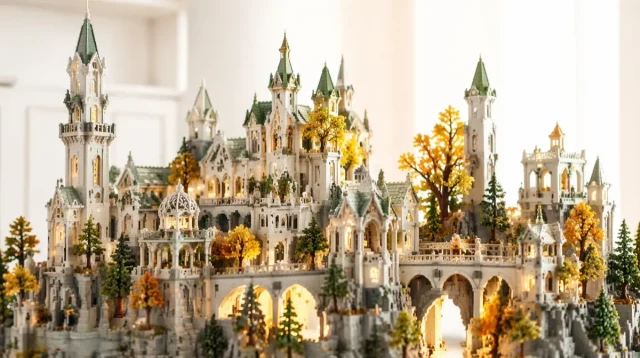
GuideIs the LEGO Rivendell Worth It? (Honest Take)
Rivendell is 6,181 pieces of elves, waterfalls, and Elrond's council chamber. Here's what actually makes it worth the shelf space, and who should just buy the poster instead.
 Guide
GuideLEGO Masters UK: The Original Show and What Happened to It
The UK version started it all in 2017, ran two series with no cash prize, then quietly stopped. Here's what happened.