LEGO Planet Earth and Moon in Orbit (42179)
A working desktop orrery in Technic, and turning that crank is pure joy.
Brick Rated Score
Set 42179 · 2024
Affiliate link. We may earn a commission at no extra cost to you.As an Amazon Associate we earn from qualifying purchases.
This is the set that finally got me to understand why an orrery is such a lovely thing to own.
You turn one little crank and the Earth spins, the Moon circles it, and the whole arm swings around the Sun at genuinely close to the real orbital periods. It is not going to win any beauty contests, and for 526 pieces the price stings, but as a gearing puzzle that actually teaches you something it is one of a kind. If you love mechanisms more than looks, this one is for you.
Best for: science-minded builders who love watching gears do clever things
What it is
I did not expect a Technic box with no wheels in it to charm me the way this one did. Planet Earth and Moon in Orbit is a working orrery, a little mechanical model of our corner of the solar system, and the whole thing runs off a single hand crank. Turn it and the platform carries the Earth and Moon around the Sun, the Moon loops around the Earth, and both the Earth and Sun spin on their own axes. The mechanism is the star here, and watching it all move together after you finish is the kind of quiet delight that makes you crank it again just to see it happen once more.
The catch
I will be straight with you about the caveats, because they are real. The looks are the weak point. This is exposed Technic through and through, all beams and pins and a turntable, topped with a ring of month stickers, and it does not have the smart finished feel of a display piece. Next to those gorgeous brass and wood orreries you see in museum shops, it looks plainly mechanical. There is also a fair bit of backlash in the gearing, so when you first turn the crank nothing moves, then the Moon starts, then the Sun, then the Earth catches up. And the value is hard to defend on paper: 526 pieces for about 74.99 dollars puts it near the bottom for price per part, and the manual frustratingly includes no facts about the actual orbits it is modeling, which felt like a missed chance for a set that leans so hard on being educational.
Who it's for
So who should get this. If you are the sort of builder who cares more about how a thing works than how it looks, who reads gear ratios for fun and wants a desktop object that genuinely demonstrates a year and a lunar month, you will treasure it. It is also a wonderful bridge for a curious kid from about age ten who is ready for real mechanical thinking. If you want a beautiful sculpture for the mantel, or you judge a set purely by piece count for the money, this is not the one, and there is no shame in skipping it. Me, I fall on the delighted side, backlash and all.
The parts story
What the build is actually like, and the pieces worth knowing about.
The build itself asks a bit more of you than the low piece count suggests. Several steps have you seating multiple connector pins into sub-assemblies at once, and getting them properly home sometimes means squinting back at the instructions to check the geometry. It is not a punishing build, but it is not a mindless one either, and the payoff is that you slowly watch a gear train assemble into something that actually keeps time. There is a 36-tooth gear near the base doing a lot of the heavy lifting, gearing the motion down so the input crank turns into those slow, accurate orbits up top.
The headline parts are the brand new molds. The Sun and the Earth are both built from exclusive half-sphere pieces that had not appeared before this set, and the two Earth halves come printed with the continents rather than stickered. The Moon is a neat bit of parts economy, just a light bluish grey ball joint that reads perfectly as our little satellite. A common gripe worth knowing: the Earth print does not line the equator up with the seam between the two halves, which nags at some builders, and the visible pin holes in the spheres divide opinion too. For me they just underline that this is proudly a Technic model.
Fun facts
- 01It is the very first LEGO Technic set that is not a vehicle, plane or truck, a real departure for a theme built around cars and cranes.
- 02The gearing is accurate enough that the Earth rotates close to 365 times for every full orbit of the Sun, and the Moon completes a lap in roughly 27 days, all without complex differentials or worm gears.
- 03The Sun and Earth use new exclusive half-sphere molds created for this set, with the Earth halves printed with land masses rather than stickered.
- 04Carrying an RRP of about 74.99 dollars (69.99 pounds), it is projected to retire around mid to late 2026.
What other builders say
This write-up is grounded in real reviews and builder discussion, not just one opinion. A few worth reading:
More reviews

Liebherr R 9800 Excavator
The biggest Technic set of its day, and it still feels enormous.

Koenigsegg Sadair's Spear Megacar
The biggest Ultimate supercar yet, with a Ghost Mode party trick I couldn't stop showing people.
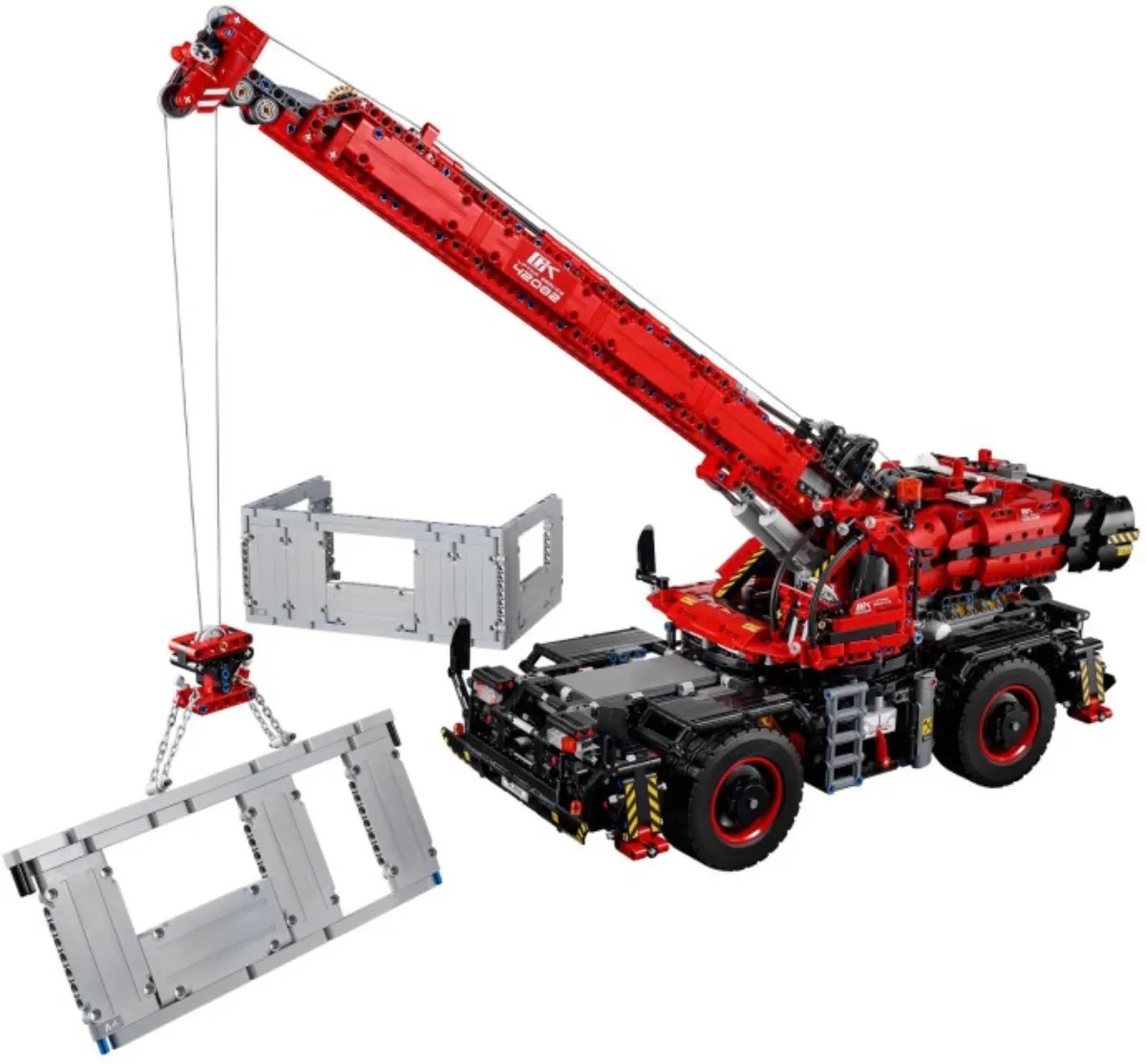
Rough Terrain Crane
The biggest Technic set of its day, and a proper motorised monster.