

Is the LEGO Colosseum Worth It? (Honest Take)
The LEGO Colosseum is one of the biggest sets the company has ever released, and that scale is exactly what makes the worth it question complicated.
If you've spent any time in the Icons line, you already know the LEGO Colosseum (10276) by reputation before you've even opened the box. It's a genuine giant, 9,036 pieces, and for a while after it launched it held the title of the largest LEGO set ever made by piece count. So is the LEGO Colosseum worth it, or is this one of those sets you buy for the bragging rights and then never actually build? We think the honest answer sits somewhere in between, and it depends heavily on what you're hoping to get out of the box.
This isn't a set that tries to be everything. There's no minifigure scale, no play features, no little gladiator to pose in the arena. It's a display model, full stop, built to recreate the shape and texture of a 2,000 year old amphitheater at a scale big enough to actually feel like something. That single-mindedness is either exactly what you want from a set this size, or it's the thing that talks you out of it.
We'll walk through what the build is actually like, what you get for the piece count, who it's genuinely wrong for, and what to expect if it goes up for retirement, because that question comes up in almost every worth it conversation about a set this large.
The short answer
The LEGO Colosseum earns its size. It's a genuinely detailed, well-scaled display piece for anyone who loves the building process as much as the finished shelf piece, but it offers nothing for builders who want play value or a fast payoff. Buy it because you want to build and display it, not as a bet on future value.
What you're actually building
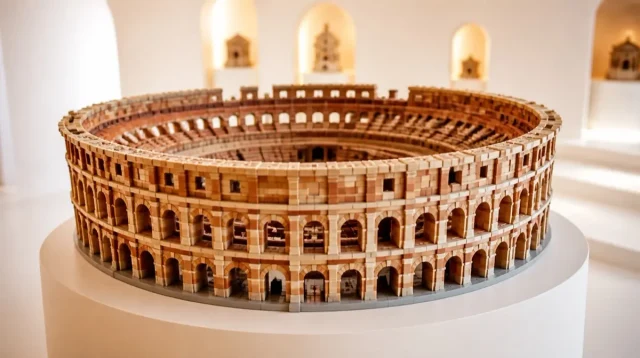
The Colosseum isn't a full circle. LEGO built roughly two thirds of the oval, which is the standard trick these architecture heavy Icons sets use to keep the footprint manageable while still reading as the whole structure once it's finished and sitting on a shelf. You get the tiered seating rows, the arched facade running around the exterior in the familiar stacked orders, and a cutaway section that exposes some of the underground area beneath the arena floor, the part most people don't picture when they think of the Colosseum but that historians care about quite a bit.
The building itself is heavy on repetition. You'll build the same arch and seating unit dozens of times over, which is either meditative or a slog depending on your patience for that kind of build. There's no dramatic midpoint twist the way a Star Wars ship might have a cockpit reveal. What you're doing is assembling a structure, piece by piece, the way an actual building goes up: foundation first, then the repeating architectural elements, then the finishing details on top.
There's also a practical side to that two thirds decision worth calling out. Building the full oval would have pushed the piece count and footprint into territory that stops being a shelf model and starts being a piece of furniture. Cutting it back lets you see into the structure, the seating tiers and the underground passage, in a way a fully enclosed circle wouldn't have allowed. It's a design compromise, and a smart one, not a corner cut to save money.
The build experience, honestly
This is a set for people who enjoy the process, not just the payoff. The early bags are foundation work, plates and beams that don't look like much until you're several hours in. Once the arch sections start repeating, the build finds a rhythm, and that rhythm is either soothing or tedious depending on your temperament. We'd put this closer to the Titanic and Eiffel Tower end of the Icons lineup than to something like the Colosseum's flashier theme cousins in Star Wars, in the sense that the reward here is architectural accuracy, not surprise.
Expect this to take multiple sittings. A set this size isn't a weekend project for most builders unless you're clearing serious hours, and that's fine, it's built to be paced out. If you're the kind of builder who wants a quick sense of progress and a visible payoff every hour, the repetition in the middle stretch can wear on you before you reach the finishing details.
The instructions themselves stay clear the whole way through, even in the repeating sections, which matters more than it sounds like it should. A set this dense could easily lose you in a wall of near-identical steps, but the numbering and sub-assembly grouping keep you oriented. That's the kind of quiet, unglamorous quality control that separates a set built to be enjoyed from one built to just hit a piece count target.
What it looks like once it's done
The finished model earns its shelf space. It photographs well because the arched facade catches light and shadow in a way that reads as genuinely architectural rather than blocky, and the scale is large enough to hold a room on its own. It comes with a nameplate stand, which is standard for the Icons line and a nice touch for anyone building a display of these large landmark sets together.
What it doesn't do is play. There's nothing to open, nothing to move, no minifigures to pose around it. If you or the person you're building this for wants a set that does something once it's finished, this isn't it. It's a static, large, detailed model meant to be looked at, which is exactly what a chunk of the Icons audience wants and exactly what turns off everyone else.
Finding the space for it afterward is a real consideration, not an afterthought. This isn't a set you tuck onto a crowded bookshelf next to a dozen smaller builds. It wants its own stretch of surface, ideally somewhere it can be seen from a few feet back so the tiered depth actually reads. If you don't have that kind of space cleared out already, it's worth figuring out where this one lives before you commit to the box.
Is the piece count actually worth it
9,036 pieces is a real number, not padding. This isn't a set where half the box is filler plates to inflate a marketing figure, the piece count reflects genuine architectural detail across a large structure. That said, a lot of those pieces are the same handful of elements repeated across dozens of near-identical seating and arch sections, so the piece count buys you scale and accuracy more than it buys you variety in the building experience itself.
If your measure of worth it is pieces per hour of engaging building, this set is more about endurance and payoff than constant novelty. If your measure is finished size and detail for the money, the Colosseum delivers on that in a way few sets in the Icons catalog can match, simply because of how much real estate it commands once it's built.
Worth mentioning too: piece count on its own is a blunt way to judge any set, this one included. A smaller, more varied build can feel more rewarding minute to minute than a big repetitive one, and that's a fair trade some builders would make. What the Colosseum has going for it is that the repetition is in service of something real, an actual historical structure rendered at a scale that makes the detail legible, not repetition for its own sake.
Who this set is actually for
This one's for the display builder. If you already have a shelf of Icons landmark sets, or you want a Colosseum specifically because you love Roman history or architecture, this is an easy yes. It's also a strong pick for someone who genuinely enjoys long, repetitive builds as a form of relaxation, the kind of person who finds the Eiffel Tower or the Titanic calming rather than exhausting.
It's the wrong set for anyone expecting play value, for younger builders who want to finish something in an afternoon, or for anyone buying primarily for the piece count as a bragging number without actually wanting to sit through the build. If that's the goal, there are flashier and faster sets in the Icons range that will scratch that itch better.
It's also worth thinking about who's actually going to build it if this is a gift. A set this size and this repetitive rewards patience over excitement, so it lands best with an adult builder who already has a few big Icons sets under their belt, not a kid or a first time builder looking for their next set. Gifting it to someone without gauging their appetite for a long, steady build is the most common way this one ends up half finished in a closet.
Retirement and timing
LEGO doesn't publish a retirement calendar, so we can't tell you exactly when the Colosseum will leave shelves, but sets in the Icons line typically stay in the catalog for a few years before they're phased out, and large landmark sets in particular tend to get reported as harder to find secondhand once they do retire. If you've been circling this one for a while and it's currently in stock at a price you're comfortable with, that's usually a better time to buy than waiting and hoping it comes back around.
We'd say don't buy this one purely as a financial bet on future value. Buy it because you want to build it and display it. If it happens to hold or gain value down the line, that's a bonus, not the reason to pull the trigger on a set this size.
One more practical note on timing: sets this large also tend to see periodic discounts while they're still active in the catalog, so if you're not in a rush, it's worth keeping an eye on the price for a stretch rather than buying the moment you decide you want it. Patience on timing costs you nothing here, since the set itself isn't going anywhere on a fixed schedule you can plan around.
Common questions
Does the LEGO Colosseum come with minifigures?
No. This is a display model with no minifigures included. It's built purely as an architectural piece, focused on recreating the structure and texture of the real Colosseum rather than offering any play scale or characters to pose around it.
How long does the LEGO Colosseum take to build?
Expect this to span multiple sittings rather than a single afternoon. At 9,036 pieces with a lot of repeating architectural sections, most builders pace it out over several sessions across a week or two. It's a marathon build, not a quick weekend project, and it's more enjoyable if you treat it that way from the start.
Is the LEGO Colosseum good for display?
Yes, this is where it shines. The arched facade and tiered scale photograph and display well, and it comes with the nameplate stand typical of the Icons line. Just know it's a large piece that needs real shelf or table space to look right.
Is the LEGO Colosseum worth it compared to other Icons sets?
It depends on what you want. For scale, detail, and a genuine architectural build experience, it's one of the strongest picks in the Icons lineup. If you want variety in the build or any play value, sets outside this large-landmark category will serve you better.
Related articles
 Guide
GuideWhere to Watch LEGO Masters (US, Canada, UK, Australia)
A country-by-country guide to legally streaming LEGO Masters US and the Australian spinoff, plus the real story on the UK version and season 6.
 Guide
GuideIs the LEGO Rivendell Worth It? (Honest Take)
Rivendell is 6,181 pieces of elves, waterfalls, and Elrond's council chamber. Here's what actually makes it worth the shelf space, and who should just buy the poster instead.
 Guide
GuideLEGO Masters UK: The Original Show and What Happened to It
The UK version started it all in 2017, ran two series with no cash prize, then quietly stopped. Here's what happened.