

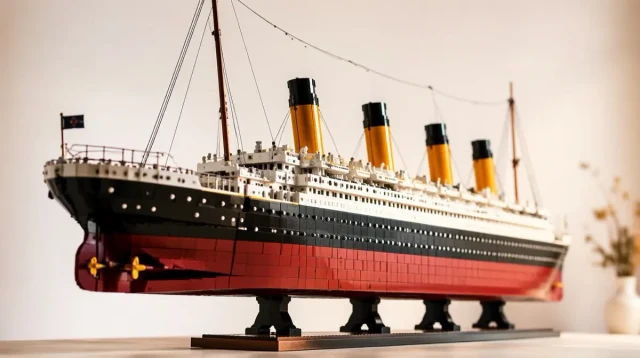
Is the LEGO Titanic Worth It? (Honest Take)
The LEGO Titanic is 9,092 pieces and a serious commitment of shelf space and evenings. Here's who actually gets their money's worth out of it.
If you're asking is the LEGO Titanic worth it, you already know the basic numbers: this is one of the largest LEGO® sets ever released, a 9,092 piece model of the ship built in three separate sections that connect end to end. That scale is exactly why the question matters more here than it does for a smaller set. This isn't an impulse buy you build over a rainy Saturday and forget about. It's a multi-week project that needs a plan for where it lives once it's done, and that changes the math on whether it's actually right for you.
We're not going to tell you it's universally great, because it isn't universally anything. It's a niche set built for a specific kind of builder and a specific kind of display space, and it rewards both patience and planning in a way most sets don't ask for. Below is the honest version: what the build is actually like, who gets real value out of owning it, and who should probably spend their money somewhere else.
This is part of our Worth It series, where we look past the box art and marketing copy and get into what owning the set is actually like once the last brick is placed.
The short answer
The LEGO Titanic earns its place for builders who already like big, steady Icons builds and have a real spot to display it. It's a poor fit for anyone newer to large sets, short on shelf space, or hoping for a play set rather than a display piece. Know which builder you are before you commit to all 9,092 pieces.
What you're actually buying
The LEGO Titanic is part of the Icons theme, LEGO's line for adult-oriented, display-focused builds, and it sits at the very top of that lineup by piece count. At 9,092 pieces it's not just big for a LEGO set, it's big in absolute terms: the finished model runs over a meter long, built in three connectable hull sections so it's manageable to build and (somewhat) manageable to move. You also get a small stand and plaque setup, which matters more than it sounds like once you realize how much floor or shelf space this thing wants.
The set also leans hard into the ship's actual profile rather than a simplified toy version of it. The hull curves the way the real Titanic's did, the funnels taper properly, and the deck layout follows the ship's real structure rather than a generic ocean liner shape. That level of shape accuracy is part of why the piece count climbs so high. Getting a curve that reads correctly from across a room takes a lot more small angled pieces than a boxier model would.
What you don't get is a play set. There's no minifigure crew wandering the decks, no opening cabins to act out a scene. This is a static model built to be looked at, which is worth sitting with before you buy it. If part of your hope is that a kid (or you) will pose figures on the deck and tell stories, this isn't that set. It's closer to a piece of furniture than a toy, and it's priced and built accordingly.
The build experience, honestly
Nine thousand pieces sounds intimidating and it is, but not in the way people expect. The techniques themselves aren't especially hard. What makes this a serious build is the sheer repetition: hull plating goes on in long, similar-looking runs, and there are stretches where you're doing the same maneuver dozens of times in a row before the shape underneath starts reading as a ship. Builders who like a steady, meditative process tend to love this. Builders who want each step to feel like a new discovery tend to burn out somewhere in the second section.
The three-section structure actually helps here more than you'd expect. Each hull piece is its own mini project with its own start and finish, so you get a real sense of progress every few days instead of one undifferentiated slog toward a finish line that feels a hundred hours away. The middle section, where the ship's main superstructure and funnels take shape, is where most builders say the process gets genuinely interesting again after a stretch of repetitive plating.
Expect this to take multiple sittings spread over more than one week for most people, not a single weekend. Sorting matters more here than on a typical set because of the sheer piece volume; laying out bags by number and having a clear table before you start will save you real frustration later, and it's worth doing one section fully before opening the next rather than mixing bags across sections. The reward is real, though. Watching the hull go from a flat frame to a recognizable ship silhouette is one of the better payoff moments in the whole Icons line.
Where it actually lives
This is the part people underestimate before buying, and it's the single biggest factor in whether the set is worth it for your situation. A finished model this long needs a dedicated spot, not a corner of a bookshelf you'll rearrange around it later. Think a mantel, a long low shelf, or a dedicated display table, somewhere it won't get bumped and won't need to be moved every time you vacuum.
Moving the finished model matters too, and it's easy to overlook until you're actually doing it. Even split across three hull sections, each piece is long, heavy for its size, and awkward to carry with one hand under the middle where the plating is thinnest. Plan to move it as a two-person job, or move each section individually rather than trying to carry the whole assembled ship at once.
If you don't have that display spot already picked out, that's a real reason to hold off, not a small detail to figure out after the box arrives. We've seen people build the whole thing and then discover it doesn't fit anywhere they actually want to keep it, which is a frustrating way to end a multi-week project. Measure your intended spot before you order, not after you finish the last hull section, and factor in a little extra clearance so it doesn't sit right at the edge of a shelf.
Who this is genuinely worth it for
The clearest yes is a builder who already has a few large Icons sets under their belt and knows they like the format: long, steady, repetitive builds that end in a serious display piece. If you've built something in the 3,000 to 5,000 piece range and enjoyed the process more than you tolerated it, this is the natural next step up, and the ship subject matter gives it a different feel than the architecture sets in the same line.
It's also a strong pick for anyone with a genuine interest in the Titanic itself, whether that's history, engineering, or the ship's design specifically. The model rewards that kind of attention; you notice details in the superstructure and the hull shaping that a casual builder might build right past. History buffs in particular tend to get more out of the build than collectors chasing the theme for its own sake, because they're already primed to notice the small choices the designers made in translating a real ship into plastic bricks.
Gift buyers should be careful here, though. This is a set for someone who has already told you they want it, not a surprise gift for someone you're guessing might like a big build. If you're shopping for someone and you're not sure, a smaller set in the same Icons line makes a safer gift, with this one saved for when they've told you directly they're ready for it.
Who should skip it
If you're newer to large builds, this isn't the place to start. The piece count and the long repetitive stretches can turn what should be a rewarding project into a slog if you haven't built up the patience for it on smaller sets first. Try something in the 2,000 to 4,000 piece range in the same Icons theme before committing to the top of the range, and see how that experience actually feels before spending on something four times the size.
Skip it too if display space is genuinely tight. A model this size sitting half-assembled in a box because there's nowhere to put it is a common outcome, and it's a shame given how much time goes into building it. A set this large in a small apartment or a shared space with limited surfaces tends to create more household friction than the build itself is worth, no matter how good the finished model looks in photos.
And if what you actually want is a play set, something with opening rooms, a crew, and a story to act out, look at a different theme entirely. The Titanic is built to be admired, not played with, and kids especially tend to lose interest fast once they realize there's no interior to explore or characters to move around.
The honest bottom line on value
Cost per piece on a set like this typically runs favorably compared to smaller sets, which is normal for large-format Icons builds, but that's not really the number that matters here. What you're paying for is a long, deliberate building experience and a genuinely impressive finished object, and whether that's worth it depends entirely on whether you want both of those things. If you're only after one or the other, a smaller set will serve you better and cost you less frustration.
We'd call this set worth it for the right builder and a poor fit for everyone else, which is about as clear a verdict as a 9,092 piece ship can get.
Common questions
How long does the LEGO Titanic take to build?
Most builders spread it over more than a week rather than finishing in one sitting, given the piece count and the long repetitive stretches of hull plating. Expect several multi-hour sessions rather than a single weekend project, especially if you sort pieces by bag before starting.
Is the LEGO Titanic good for beginners?
Not really. The individual techniques aren't difficult, but the sheer volume and repetition can be discouraging if you haven't built up patience on smaller sets first. We'd suggest something in the 2,000 to 4,000 piece Icons range before working up to this one.
Does the LEGO Titanic come with minifigures?
No. This is a static display model with no minifigure crew or interior scenes to pose. If you want a set built around characters and play, this isn't it. It's designed purely to be built once and displayed.
How much space does the LEGO Titanic need on display?
More than most people expect going in. The finished model runs over a meter long across its three connected hull sections, so it needs a dedicated shelf, mantel, or table rather than a shared corner of a bookcase. Measure your intended spot before ordering.
Related articles
 Guide
GuideWhere to Watch LEGO Masters (US, Canada, UK, Australia)
A country-by-country guide to legally streaming LEGO Masters US and the Australian spinoff, plus the real story on the UK version and season 6.
 Guide
GuideIs the LEGO Rivendell Worth It? (Honest Take)
Rivendell is 6,181 pieces of elves, waterfalls, and Elrond's council chamber. Here's what actually makes it worth the shelf space, and who should just buy the poster instead.
 Guide
GuideLEGO Masters UK: The Original Show and What Happened to It
The UK version started it all in 2017, ran two series with no cash prize, then quietly stopped. Here's what happened.