

What Does LEGO 18+ Actually Mean?
The 18+ label on a LEGO box isn't a content warning. It's a signal about build complexity, part scale, and who the set is actually designed for.
If you've been shopping lego 18+ sets and wondering what that little age badge is actually protecting you (or your kid) from, the short answer is: nothing dangerous. There's no violence rating hiding behind it, no small-parts choking hazard that suddenly appears at set number such-and-such. The 18+ line is LEGO's way of marking a set as an adult-focused build, aimed at display and craftsmanship rather than play.
That distinction matters more than it sounds like it should, because it changes what you're actually buying. A 9 year old can absolutely follow the instructions for a Botanical Collection flower set. What they probably can't do is sit still for the six or seven hours it takes to finish one, or care about the kind of finicky, repetitive stem-building that makes the set satisfying to an adult in the first place. The label is less about ability and more about intent.
We'll walk through where the 18+ badge actually comes from, what it changes about the build itself, and how to tell whether a specific 18+ set is worth it for the person you're buying it for.
The short answer
The 18+ badge on a LEGO box is a description of the build experience, not a warning label. It tells you the set favors patience, repetition, and display over play, and that the price and part count usually follow from that focus. Match the set to what the builder actually wants to do with it once it's finished, and the age number stops mattering much at all.
Where the age label comes from
LEGO puts an age recommendation on every set, and for most of the catalog that number is about safety and skill level. A 6+ set has bigger pieces and a shorter instruction booklet. A 9+ set assumes a kid who can follow multi-step sequences without help. The 18+ badge works differently. It isn't calibrated against a younger age group that could get hurt; it's calibrated against an audience that wants a different kind of experience. LEGO has said as much in how it talks about its adult-focused lines: the sets under Icons, Botanical Collection, and the Ideas theme's more elaborate builds are designed for people who already know they like building and want something that rewards patience over speed.
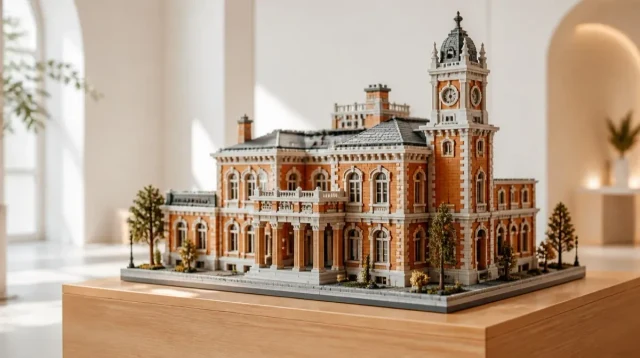
In practice, that means the 18+ mark shows up almost entirely on sets built for shelves rather than shelves of toys. You won't find it on a City fire truck or a Friends treehouse, no matter how many pieces it has. You will find it on architectural models, car replicas, and display flowers, because those sets have no play function once they're finished. There's nothing to push around the carpet. The build is the point, and the finished model is the reward.
It's not a content rating
The number on the box can read like a maturity rating if you're used to seeing 18+ stamped on movies and games, but LEGO isn't warning you about content. There's no adult humor buried in a Bugatti Chiron model, no mature theme in a Titanic replica. What you're actually being told is that the build technique, the part count, and the time commitment are pitched at an experienced builder. Compare that to a video game's 18+ rating, which flags something in the content itself. A LEGO 18+ badge flags nothing about the subject matter at all; a Home Alone house set and a Titanic replica sit at completely different ends of tone and theme, and both carry the same age mark.
That said, some 18+ sets do carry genuinely small, easy-to-lose pieces (fine detail parts, thin brackets, tiny 1x1 tiles used by the hundreds) that make more sense in a household without toddlers underfoot. That's a practical safety note, not a rating system. If you've got a curious 2 year old in the house, a set with thousands of small parts spread across a coffee table for a weekend is a genuine hazard regardless of what number is printed on the box, and that's worth planning around separately from the age label itself. It's really a household logistics question, not a content question, and it's worth treating it that way when you're deciding where to build.
What actually changes in the build
Pick up an 18+ set and the instructions themselves tell you what you're in for. The booklets run longer, the sub-assemblies get more repetitive, and the color palettes lean toward realism instead of the bright, primary tones aimed at kids. Botanical Collection sets, for instance, ask you to build the same stem or petal shape a dozen times over before moving to the next part of the arrangement. That repetition is deliberate. It's meditative for the right builder and tedious for someone who wants variety every ten minutes.
Scale is the other big shift. Icons-line vehicles and architecture sets often run into the thousands of pieces, and the largest ones dwarf anything aimed at a general audience. Titanic (set 10294) runs 9,092 pieces and builds out to over eight feet long, which is a genuinely different commitment than an afternoon set. You're not just building longer; you're managing more sub-steps, more sorted bags, and more real estate on a table while you work.
Display versus play, and why it matters
The clearest way to tell an 18+ set apart from a kids' set isn't the piece count, it's what happens after the last brick clicks in. A 9+ dragon set gets picked up and flown around the living room. An 18+ orchid arrangement gets placed on a shelf and left alone. Neither approach is better, but they're different purchases, and buying the wrong one for the wrong person is the most common way these sets disappoint.
The Botanical Garden (set 21353) is a good example of a set built entirely around this display logic. It's 3,792 pieces of stems, leaves, and blossoms with zero playability once finished, and that's exactly what its buyers want from it. Someone hoping for a toy their kid can rearrange will be let down. Someone hoping for a centerpiece that looks good on a bookshelf for years will get exactly what they paid for.
Price and part quality
LEGO doesn't publish a formal reason for it, but 18+ sets typically run at a higher price per piece than sets aimed at younger builders. Some of that reflects licensing (a Bugatti or a Home Alone house isn't cheap to secure the rights for), and some of it reflects the specialty molds used for flower stems, engine parts, or fine architectural detail that don't get reused across the wider catalog the way a basic 2x4 brick does.
What you're generally getting for that premium is tighter tolerances and more display-oriented finishing touches: printed tiles instead of stickers in a lot of cases, presentation stands or plaques, and instruction booklets that read more like a hardcover book than a pamphlet. It's worth checking a set's individual page or reviews before assuming the premium buys you anything specific, since it varies quite a bit set to set, but the general pattern holds across the adult-focused lines.
Should you buy an 18+ set for a teenager?
This is the question that actually brings most people to this topic, and the honest answer is: it depends entirely on the teenager, not the label. A 15 or 16 year old who already builds Technic sets or has finished a few thousand-piece kits will likely have no trouble with an 18+ build, and plenty of teens have received one as a gift and loved it. The badge isn't a locked door; it's a description of the experience waiting inside.
What actually matters is whether the person wants a slow, repetitive, display-focused project. If they'd rather have something with moving parts and a play pattern once it's done, an 18+ display piece is going to sit half-finished on a shelf no matter how old they are. Ask what they actually want to do with the finished model before you ask how old they are, and you'll get a much better read than the box ever will.
How to shop 18+ sets without guessing wrong
Start with the theme rather than the age number, since the 18+ badge covers a wide range of experiences that don't all suit the same person. Icons vehicles like the Bugatti Chiron reward someone who likes mechanical detail and doesn't mind a build that runs long in the middle. Botanical Collection and Art Project sets reward someone who wants a slow, repetitive project with a display payoff, closer to needlepoint than to model-building. Collector's Edition sets built around a film or franchise, like the Hogwarts Icons Collectors' Edition, reward a fan first and a builder second; a lot of the appeal is in the packaging and the memorabilia around the model itself, not just the brick count.
It also helps to check whether the set has a real function once it's built or whether it's purely for display. A working ladder truck still moves after the last brick clicks in, even if it's rated for adults; a flower arrangement or a wall art piece doesn't, and never will. Neither is the wrong choice, but they're different gifts, and matching the set's actual purpose to what the recipient wants from it is a better filter than the age number printed in the corner of the box.
Common questions
Can a kid legally build an 18+ LEGO set?
There's no legal restriction at all. The 18+ label is a LEGO marketing and difficulty designation, not an enforced age gate the way a game rating might be. Plenty of younger builders work through adult-focused sets with help or patience. It's just a signal that the set was designed with an experienced adult builder's expectations in mind, not a rule anyone has to follow.
Why are 18+ LEGO sets so expensive?
A mix of factors: licensing costs on branded builds, specialty molds used for fine detail parts, higher piece counts overall, and premium packaging or finishing touches like printed tiles and display stands. Not every 18+ set carries the same premium, so it's worth comparing a specific set's piece count and finish against similar sets before assuming the price reflects extra value.
Do 18+ sets have small parts that are dangerous for toddlers?
Some do, since fine architectural or botanical detail often uses very small pieces spread across a work surface for hours at a time. That's a household safety consideration worth planning around (a closed door, a designated build table) rather than something the 18+ label is formally warning you about.
What's the difference between 18+ and a regular adult-friendly set?
Plenty of sets outside the 18+ line appeal to adult builders too; Technic supercars and big Star Wars models are popular with grown-up collectors and often carry lower age ratings. The 18+ badge specifically marks sets built for display rather than play, with repetitive, meditative build techniques and no functional play pattern once finished.
Related articles
 Guide
GuideWhere to Watch LEGO Masters (US, Canada, UK, Australia)
A country-by-country guide to legally streaming LEGO Masters US and the Australian spinoff, plus the real story on the UK version and season 6.
 Guide
GuideIs the LEGO Rivendell Worth It? (Honest Take)
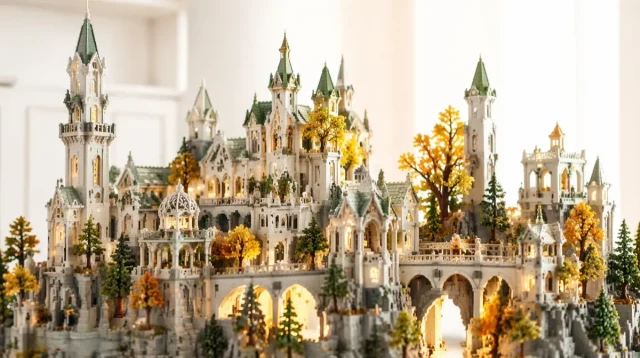
Rivendell is 6,181 pieces of elves, waterfalls, and Elrond's council chamber. Here's what actually makes it worth the shelf space, and who should just buy the poster instead.
 Guide
GuideLEGO Masters UK: The Original Show and What Happened to It
The UK version started it all in 2017, ran two series with no cash prize, then quietly stopped. Here's what happened.