Droid Commander
Three coding droids and forty missions, if you can forgive the price tag.
Brick Rated Score
Set 75253 · 2019
Affiliate link. We may earn a commission at no extra cost to you.As an Amazon Associate we earn from qualifying purchases.
This is the Star Wars version of LEGO BOOST, and the Gonk Droid is what won me over.
You build R2-D2, a Gonk, and a Mouse Droid, then bring one at a time to life with a Bluetooth Move Hub and a drag-and-drop coding app. It's a genuinely good first taste of programming for a kid who loves droids. Just know you're paying robotics money, not brick money.
Best for: A Star Wars kid aged 8 and up taking their first steps into coding
What it is
The Droid Commander is LEGO's Star Wars spin on the BOOST robotics line, and it's a different animal from a normal Star Wars LEGO® set. Instead of one display model you get three working droids, R2-D2, a Gonk power droid, and a little Mouse Droid, and you bring them to life one at a time with a Bluetooth Move Hub, an interactive motor, and a color and distance sensor. The free app runs a Scratch-style drag-and-drop coding environment wrapped in over 40 missions, so a kid isn't just following steps, they're solving story problems and watching their code make a droid move. R2-D2 rolls around and spins his dome, the Mouse Droid scoots and pops its sides open, and the Gonk (my favorite by a mile) actually waddles, leaning left and right on a clever gear-driven mechanism. For a Star Wars fan who's curious about how robots think, this is a lovely on-ramp.
The catch
Here's the honest part, and it's mostly about money and phones. At $199.99 retail, this set costs roughly 17 cents per piece, which is on the expensive side, and that's because you're paying for the electronics, not the brick count. If you walk in expecting a big detailed model for the price, you'll feel shortchanged, because the value lives in the play and the coding, not the parts. The instructions are another sticking point. There's no paper manual and no PDF, everything is inside the app, so if your phone struggles to load the building instructions (and some people's genuinely did) you're stuck until you sort it out. Reviewers also grumbled about the app itself being pushy, with unskippable videos and accessories you have to open up by grinding through missions in order. And the Mouse Droid, cute as it is, drives like a shopping cart with a bad wheel on smooth floors because only two of its four wheels get power.
Who it's for
So who's this really for? A Star Wars-mad kid around 8 and up who wants to learn a bit of coding, with a patient grown-up nearby to help wrangle the app on the first go. If that's the situation, the missions genuinely teach programming logic and the droids give real payoff for the effort. If you're a display-shelf builder chasing an accurate R2-D2 model, or you bristle at app-only instructions and premium pricing, I'd point you elsewhere. It retired back in February 2021, so it's collector territory now, but as a learn-to-code robot dressed in Star Wars, it does the job with a lot of charm. Just go in knowing what you're actually buying.
The parts story
What the build is actually like, and the pieces worth knowing about.
Building this is less about one long sit-down and more about three quick, punchy builds you can lay out at the same time. Each droid is fairly simple on its own, and the whole point is that the electronic brains, the Move Hub, motor, and sensor, swap between them, so you're constantly rebuilding and reconfiguring rather than finishing a single showpiece. The Gonk is the standout to assemble because you're putting together an actual walking mechanism out of gears, turn shafts, and the motor, and seeing that come alive is the best moment in the box. R2-D2 and the Mouse Droid are quicker and more straightforward. Because it all runs through the app, the pacing is dictated by the missions, which is engaging for a kid but can feel babied if you just want to build.
On parts, there's more here than the coding focus suggests. It debuted a new 4x4x3 dome-top brick in light bluish gray that forms R2's head, plus new smooth-spinning 18x14 wheels with no traction. You get lovely printed pieces too, including R2's dark blue curved slopes and, as a nice bit of nostalgia, a white slope with seven black vertical lines that first appeared in Classic Space in the 1980s. There are genuinely rare recolors: a light bluish gray fez, several dark turquoise elements showing up in that shade for the first time, and a dark blue 2x14 plate and hinge plate that are basically exclusive to this set. At 1,177 pieces the price-per-part math is unkind, but for a parts collector chasing exclusive colors and prints, the inventory is richer than you'd guess.
Fun facts
- 01This is one of only two Star Wars sets ever released in the BOOST robotics line, giving the app-controlled system a galaxy-far-far-away makeover.
- 02The coding app is built on Scratch-style visual programming, so a kid drags logic blocks together rather than typing a single line of code.
- 03The white slope printed with seven black vertical lines is a deep-cut throwback, first used in Classic Space sets in the 1980s and not seen since 2003.
- 04It retired in February 2021 after a June 2019 launch, and its $199.99 price came from the electronics inside, not the piece count.
What other builders say
This write-up is grounded in real reviews and builder discussion, not just one opinion. A few worth reading:
More reviews
All reviews
World Map
The biggest LEGO set ever made, and yes, it's really one enormous mosaic.
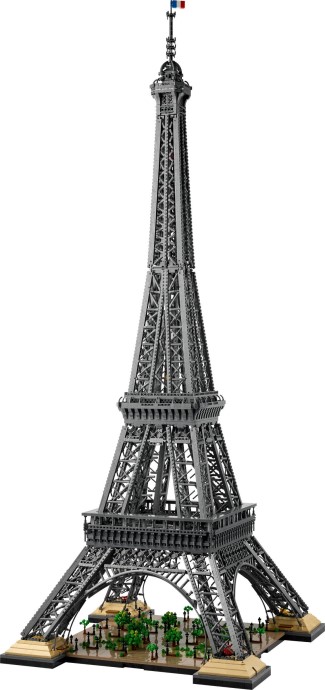
Eiffel Tower
The tallest LEGO set ever, and it makes you earn every centimetre.
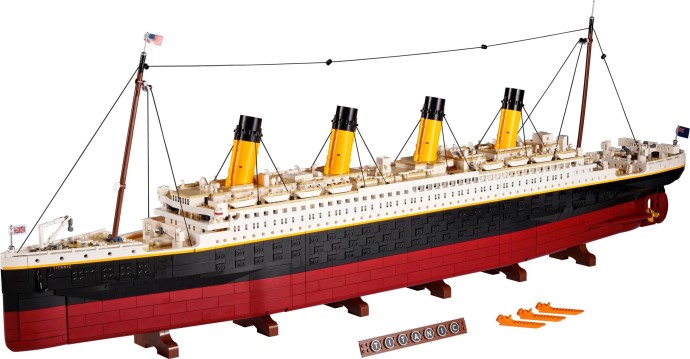
Titanic
The longest LEGO set ever made, and one of the most rewarding builds I've done.