Ocean Exploration Base
A charming underwater outpost with a real conservation heart, held back by a steep price tag.
Brick Rated Score
Set 60265 · 2020
Affiliate link. We may earn a commission at no extra cost to you.As an Amazon Associate we earn from qualifying purchases.
The thing that got me about this one is the story tucked inside it: the divers and the little drone are kitted out to pick a discarded bottle and a rusted bike frame off the seabed, and that quiet conservation angle (backed by the National Geographic tie-in) gives it more soul than most City playsets.
The three swappable modules on a central hub are genuinely fun to rearrange, and the docking submarine with its working inspection arms is the star. I'll be straight with you though, at 497 pieces for the original 80 dollar price this asks a lot, and next to the Lunar Space Station it feels a touch underbuilt. It shines brightest as a play set for a kid who loves sea creatures.
Best for: ocean-obsessed kids who want a play-focused underwater base with sharks and a working sub
What it is
The Ocean Exploration Base is exactly what it sounds like: a modular underwater outpost with a living module, a research module and a detachable submarine, all clipping onto a central hub. What got me was not the base itself but the little narrative LEGO folded in. This came out under the City Deep Sea Explorers banner with a National Geographic partnership, and the whole thing quietly leans on conservation. The divers and the underwater drone are equipped to fish a discarded bottle and a rusted bike frame off the coral seabed, and there is a sunken chest to recover too. It is a small touch, but it gives the play a point beyond generic adventure, and I found myself charmed by it.
The catch
Now for the honest bit, because the reviews at launch were not shy about it. This set is expensive for what you get. At 497 pieces for its original 80 dollar price (and it stung more in Canada), the cost per brick lands high even by City standards, and the build time is short. The comparison everyone reached for was the previous year's Lunar Space Station, which nailed the same modular hub idea with more detail and a better sense of completion. Next to that, this one can feel a little hollow. The control room module does not have many controls to speak of, minifig access into the crew quarters is genuinely tight, and the submarine roof, held on by a pair of jumper plates, has weak clutch and tends to pop loose if you actually swoosh it around.
Who it's for
So who is this for? If you are buying for a kid who is mad about the ocean, wants sharks and a real working sub, and will spend hours staging rescue-the-sea missions, this is a hit and the price fades fast into playtime. The conservation angle also makes it an easy one to feel good about. If you are an adult collector chasing display value or clever engineering, I would point you elsewhere, because the detail and the parts-per-dollar just are not there for you. It is a solid play set with a good heart, not a showpiece, and pricing it right (it has retired, so shop the secondary market carefully) makes all the difference.
The parts story
What the build is actually like, and the pieces worth knowing about.
Building it is quick and forgiving, which is the point at this age range. The modules go together in tidy sub-builds, so you finish the living pod, then the research pod, then the submarine, and each one feels like a little win before you clip it to the hub. There is nothing here that will test an experienced builder, and the assembly of the base is fairly repetitive, but the submarine is the section that actually rewards attention, with its bubble cockpit, geared propeller and the two hinged inspection arms that swing out to grab debris.
Part-wise this is a play set, not a treasure trove, so temper expectations on rare elements. The real draws are the molded creature figures, the hammerhead shark and the stingray, which are lovely on their own and get reused across builds and dioramas. You also get nice printed pieces like the camera, coffee machine and oxygen tanks, plus the transparent bubble cockpit domes and a good haul of coral and plant elements for the seabed. The five minifigs (a sub pilot, a scientist and divers) carry decent researcher printing, though two of the underwater figures share a torso. Good value in pieces you will use, less so in anything a collector would hunt.
Fun facts
- 01The set launched in 2020 under LEGO City's Deep Sea Explorers subtheme, made in partnership with National Geographic to spotlight real ocean exploration and conservation.
- 02Its modular three-pods-on-a-hub layout is essentially the underwater cousin of 2019's Lunar Space Station (60227), which used the same rearrangeable design.
- 03It retired around December 2022 after roughly two and a half years on shelves, at an original price of 79.99 dollars (54.99 pounds).
- 04Beyond the minifigs, the set ships with molded hammerhead shark and stingray figures and a coral-covered seabed complete with a sunken chest to recover.
What other builders say
This write-up is grounded in real reviews and builder discussion, not just one opinion. A few worth reading:
More reviews
All reviews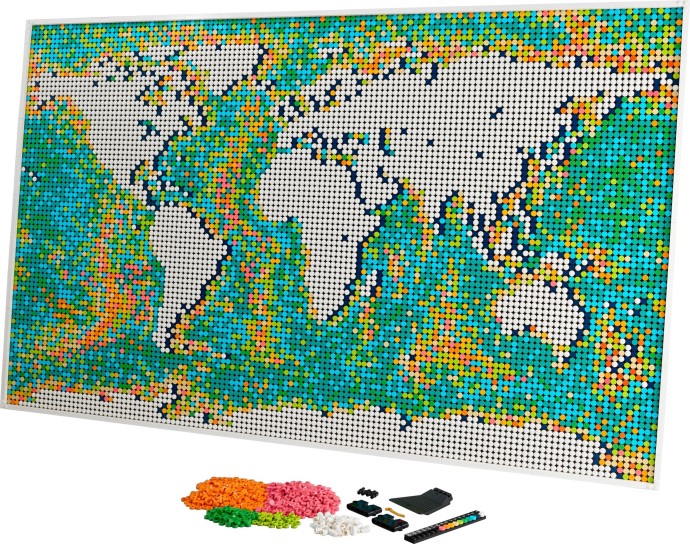
World Map
The biggest LEGO set ever made, and yes, it's really one enormous mosaic.

Eiffel Tower
The tallest LEGO set ever, and it makes you earn every centimetre.
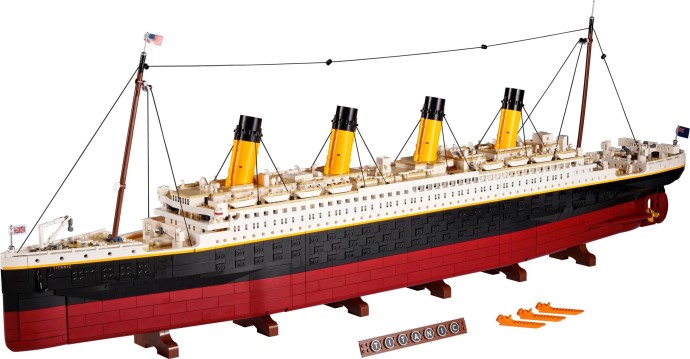
Titanic
The longest LEGO set ever made, and one of the most rewarding builds I've done.